
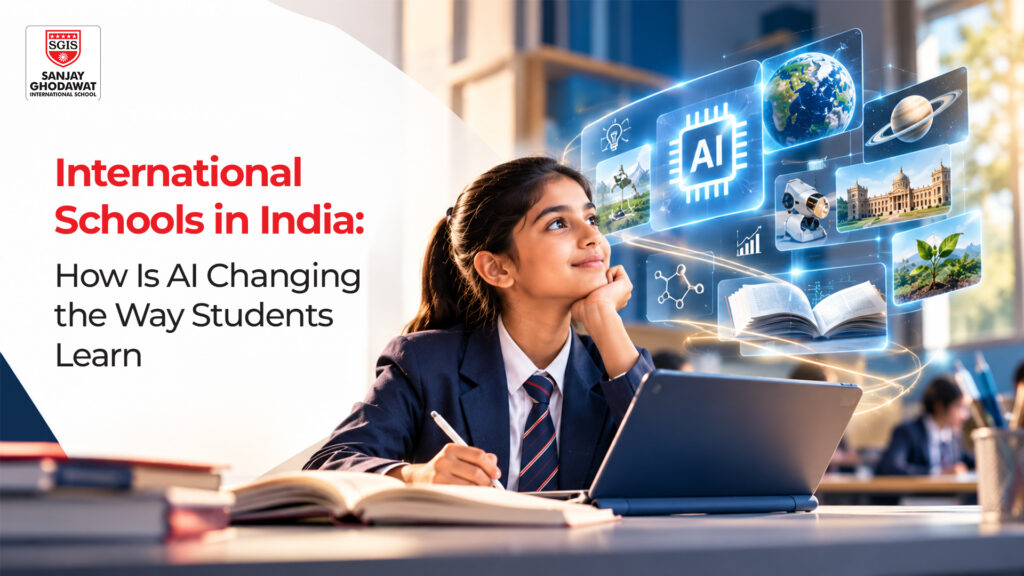
Education is changing as technology becomes an important part of everyday life. Artificial Intelligence (AI) is helping students learn in new ways by making lessons more interactive, supporting individual learning needs and encouraging creative thinking. From personalised study plans to virtual learning tools, AI is changing how students understand concepts, solve problems and explore new ideas.
For parents exploring international schools in India, understanding how AI fits into modern education can help them make informed decisions about their child’s future. The goal is not to replace teachers with technology but to create learning experiences that help students become confident, curious and independent learners.
How Is AI Transforming the Classroom Experience?
Traditional classroom teaching often follows a common pace, even though students have different learning styles and abilities. AI-powered educational tools can help teachers address these differences by providing additional support and learning opportunities.
For example, students who find mathematics challenging can practise problems at their own pace, while those who understand a topic quickly can explore more advanced questions. AI-based tools can also provide instant feedback, helping students identify mistakes and improve their understanding.
In international schools, where inquiry-based learning, practical activities and independent thinking are often important, these tools can complement classroom teaching and make learning more engaging.
5 Ways AI Is Changing How Students Learn
AI is transforming education by personalising lessons, making classroom activities more interactive and helping students develop critical thinking, problem-solving and digital skills with teacher guidance.
1. Personalised Learning for Every Student
Every child learns differently. Some students understand concepts through visual examples, while others prefer reading, discussions or hands-on activities. AI-powered learning platforms can analyse students’ responses and suggest suitable exercises, explanations and revision activities. This allows students to spend more time on topics they find difficult and progress through familiar concepts with greater confidence.
Personalised learning can also help teachers identify areas where students need additional guidance. However, teachers remain essential for understanding each child’s emotions, interests and individual circumstances.
2. Making Lessons More Interactive
AI is making classroom learning more engaging through simulations, virtual experiments, interactive quizzes and educational applications. For instance, students studying science can explore how the human body works through digital models. In geography, they can examine climate patterns, while language learners can use digital tools to practise vocabulary and improve writing.
These experiences can help students connect theoretical knowledge with real-world situations. When combined with classroom discussions and practical activities, technology can make complex concepts easier to understand and remember.
3. Developing Critical Thinking and Problem-Solving Skills
AI tools can provide quick answers, but meaningful learning requires students to question information, examine evidence and develop their own conclusions. Teachers can use AI-generated examples, case studies and problem-based activities to encourage students to compare viewpoints, identify errors and explain their reasoning. Students can also explore different approaches to a problem before deciding which solution is most appropriate.
This approach supports essential skills such as creativity, logical thinking, research and decision-making. These abilities are valuable not only for academic success but also for higher education and future careers.
4. Supporting Teachers and Improving Feedback
AI can assist teachers with routine tasks such as preparing practice questions, organising learning resources and identifying common mistakes in assessments. This can give educators more time to focus on classroom discussions, individual mentoring and student development.
Some educational platforms also provide immediate feedback on quizzes and exercises. Students can understand where they went wrong and revisit challenging concepts without waiting for the next assessment.
However, AI-generated feedback should be reviewed by teachers to ensure that it is accurate, appropriate and relevant to the student’s learning objectives.
5. Preparing Students for a Technology-Driven Future
As AI becomes more common across industries, students need to understand how to use technology responsibly and effectively. Schools can introduce age-appropriate AI activities that encourage students to explore coding, data interpretation, digital research and creative problem-solving. They can also discuss misinformation, data privacy, copyright and the importance of verifying AI-generated information.
These experiences help students develop digital literacy alongside communication, collaboration and independent thinking. The aim is to prepare learners to use technology thoughtfully rather than depend on it for every task.
What Should Parents Look for in International Schools in India?
Choosing a school involves more than checking whether it uses the latest technology. Parents should consider how digital tools contribute to their child’s overall development.
When comparing international schools in India, look for the following factors:
- Balanced technology integration: AI should support classroom teaching, practical learning and meaningful student interactions.
- Qualified and supportive teachers: Educators should guide students in using technology responsibly and understanding concepts clearly.
- A strong academic curriculum: The curriculum should encourage inquiry, creativity, communication and real-world application.
- Digital safety and privacy: Schools should have appropriate practices for protecting student information and managing technology use.
- Holistic development: Sports, arts, teamwork, leadership and emotional well-being should remain important parts of school life.
Parents considering the best international school in India should also ask how AI is used in everyday lessons, how teachers supervise its use and how the school prevents students from becoming overly dependent on digital tools.
Can AI Replace Teachers in Schools?
AI can support teaching, but it cannot replace the human connection that makes education meaningful. Teachers recognise when students feel confused, encourage them when they lose confidence and help them develop values such as empathy, responsibility and respect.
A teacher can also adapt a lesson based on classroom discussions, personal observations and students’ emotional needs. AI tools may provide information and suggestions, but educators bring context, experience and human understanding to the learning process. The most effective approach combines technology with teacher guidance, practical experiences and opportunities for students to learn together.
Conclusion
AI is creating new opportunities for personalised, interactive and future-focused education, but its success depends on how thoughtfully schools use it. Parents should choose a learning environment that balances technology with strong teaching, creativity and holistic development. SGIS (Sanjay Ghodawat International School) focuses on international curricula and a learning environment that encourages students to develop knowledge, confidence and independent thinking. As education continues to evolve, the right school can help children use emerging technologies responsibly while preparing for the opportunities ahead.