
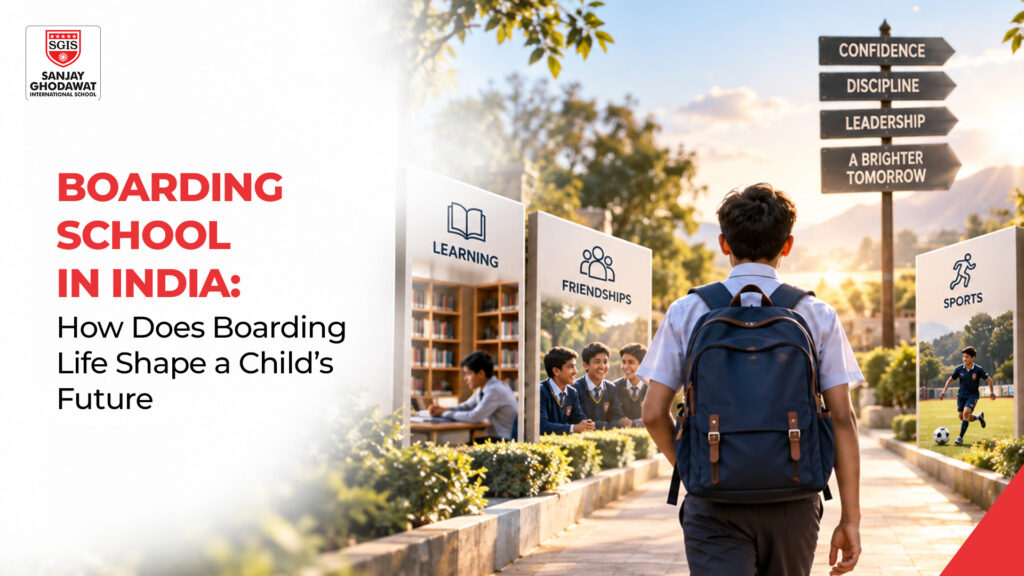
Choosing a school is about more than academics. For parents considering a boarding school in India, the learning environment, daily routines, peer relationships, and opportunities outside the classroom can all influence a child’s development.
Boarding life gives students an experience where learning continues beyond school hours. They learn to manage routines, interact with different people, take responsibility, and become more comfortable making decisions independently. But how does this experience shape a child’s future?
Life Beyond the Classroom
In a boarding school, children spend a significant part of their daily lives within the school community. This creates opportunities to learn through everyday experiences.
Students may develop:
- Greater independence in managing daily routines
- Better time-management habits
- Stronger communication skills
- Greater responsibility for personal belongings and tasks
- Confidence in handling new situations
- The ability to live and collaborate with diverse peers
These experiences can complement academic learning and help children become more self-reliant.
How Boarding Life Builds Independence
One of the most noticeable changes in boarding students is their growing ability to manage everyday responsibilities. Living away from home gives children regular opportunities to make decisions, organise their time, and take ownership of their daily lives.
Managing Daily Routines
Students learn to organise their schedules, balance academics with activities, and stay consistent with their daily routines.
Taking Responsibility for Personal Tasks
Boarding life encourages students to look after their belongings, personal needs, and everyday responsibilities without constant parental assistance.
Making Everyday Decisions
From choosing how to use their free time to planning school activities, students gradually become more confident in making age-appropriate decisions.
Solving Problems Independently
New experiences encourage students to think through challenges, explore solutions, and understand when to seek guidance from teachers or mentors.
Learning to Ask for Help
Students learn that independence also means knowing when to ask for support from teachers, wardens, mentors, and peers when they need it.
Friendships That Teach Valuable Life Skills
Living and learning alongside peers creates a different social experience from attending school for a few hours each day. Students learn to:
- Share spaces and responsibilities
- Respect different opinions
- Resolve everyday disagreements
- Support classmates
- Work as part of a community
- Build lasting friendships
These experiences can strengthen collaboration and interpersonal skills that are useful in higher education, workplaces, and everyday life.
A Structured Routine Can Build Discipline
Boarding schools typically follow structured schedules covering academics, meals, recreation, study time, sports, and rest.
A consistent routine can help students understand how to balance different priorities. Over time, this can encourage better organisation and self-discipline without making learning feel limited to classroom hours.
Sports, Activities and Experiences Outside Academics
A child’s development is not shaped by textbooks alone. Sports, arts, clubs, leadership activities, community service, and outdoor experiences can provide opportunities to discover interests and develop new abilities.
A well-rounded boarding school in India can use these experiences to encourage students to explore their strengths while learning teamwork, perseverance, and leadership.
Learning to Make Decisions
Boarding life gives students opportunities to make age-appropriate decisions within a supervised environment. Whether it is managing study time, choosing activities, handling friendships, or responding to everyday challenges, these experiences can help students understand the consequences of their choices.
The goal is not to leave children completely on their own. It is to gradually give them responsibility while providing guidance when they need it.
The Role of Teachers and Boarding Staff
For parents, the quality of support available outside the classroom is just as important as academics.
Teachers, house parents, mentors, counselors, and activity coordinators can contribute to a student’s boarding experience. A supportive environment allows children to ask questions, discuss challenges, and receive guidance as they adjust to residential life.
How Boarding Can Prepare Students for Higher Education
Moving from school to university often requires students to manage their own schedules, responsibilities, relationships, and academic workload.
Boarding experience can give students an opportunity to develop these skills earlier. Managing daily routines, living with peers, participating in activities, and taking responsibility for personal tasks can help students become more comfortable with greater independence.
What Parents Should Look for in a Boarding School
Choosing a boarding school in India requires parents to look beyond academic results. Important factors include:
Academic approach: Understand the curriculum, teaching methods, academic support, and learning opportunities.
Residential environment: Look at accommodation, supervision, safety, hygiene, food, and student wellbeing.
Student activities: Check opportunities for sports, arts, clubs, leadership, and experiential learning.
Pastoral support: Understand how teachers, mentors, and counsellors support students.
Parent communication: Check how regularly the school communicates with families about student progress and important matters.
Campus environment: Consider whether the overall environment feels suitable for your child’s age, personality, and learning needs.
Conclusion
A well-supported boarding experience can shape more than a child’s academic journey. It can help students become more independent, responsible, adaptable, and confident in managing new situations. For parents exploring a boarding school in India, looking at the complete student experience can help them choose an environment that supports both present learning and future growth. SGIS offers a supportive boarding environment where students can learn, grow, and develop essential life skills alongside their academic journey. With the right balance of academics, activities, guidance, and community, boarding life can prepare students to approach the future with confidence.