blogs

International School in Pune: Why a Global Curriculum Matters | SGIS
blogs

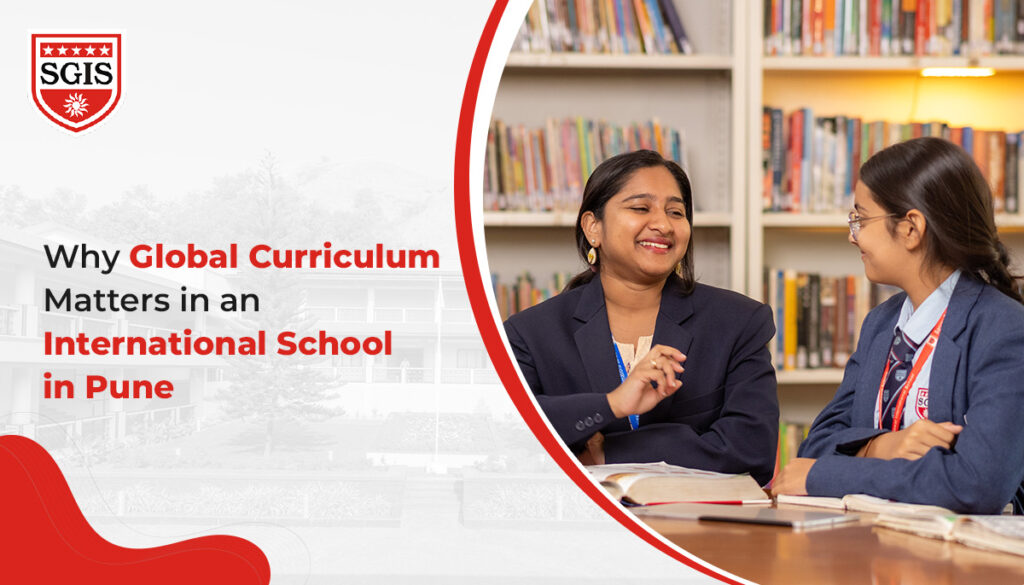
Why Global Curriculum Matters in an International School in Pune

Introduction Education is no longer limited by geographical boundaries. Today’s curriculum must prepare pupils for a connected, rapidly evolving, and competitive world. Parents are starting to realize that this change may require more than just standard methods. This is where an international school in Pune plays a crucial role. These schools are becoming more and more popular among families who want to provide their kids with an educational setting that aligns with international norms and expectations. Academic achievement is not the exclusive aim of a global curriculum. It develops students’ critical thinking, questioning and knowledge application skills. It promotes imagination, problem-solving skills, and practical knowledge. These international principles are combined with a well-rounded approach to student development at an international school in Pune. The objective is to prepare students for life, higher education, and employment in a world that requires alertness and flexibility, not only for tests. Understanding a Global Curriculum What Is a Global Curriculum? International academic standards and viewpoints serve as the foundation for a global curriculum. It helps students make connections between concepts from different fields and cultures by concentrating on developing understanding that transcends local contexts. It promotes exploration and flexibility in learning as opposed to a rigid, one-dimensional approach. International Education Frameworks Numerous foreign schools adhere to internationally recognized frameworks like Cambridge, IB, and others. These methods provide flexibility in instruction and evaluation while offering structured learning routes. They are made to conform to global academic standards, which facilitates students’ migrations between educational systems. Focus on Skill Based Learning A global curriculum’s focus on skills is one of its main features. Pupils are urged to approach challenges creatively, think critically, and speak eloquently. Instead of being passive, learning becomes active. Students engage, ask questions and participate which aids in their successful retention and application of knowledge. Benefits of Studying in an International School in Pune Global Learning Environment in Pune Although being entrenched in a familiar setting, an international school in Pune exposes kids to a variety of educational philosophies and global viewpoints. Because of this equilibrium, students may adjust to global norms without losing their local context. Skill Based Education Approach Understanding takes precedence before memorization. Students are encouraged to engage on projects, investigate ideas and use their knowledge in real-world contexts. This method fosters learning confidence. Opportunities for Global Higher Education Universities all across the world accept international curriculum. Transitioning into international higher education systems is frequently simpler for students attending an international school in Pune. How Global Curriculum Prepares Students for the Future Readiness for International Universities The academic foundation needed for higher study overseas is built through a worldwide curriculum. Students learn about independent study techniques, research-based learning, and scheduled assignments. Cross Cultural Awareness Students get an appreciation for and knowledge of diverse viewpoints. They gain cultural awareness through exposure to global concepts, which is crucial in a variety of academic and professional settings. Career Ready Skills Daily learning experiences foster the development of abilities including leadership, teamwork, and communication. These skills help students get ready for both the classroom and the career. Why Parents Prefer an International School These days, parents want more than simply academic success. They want their kids to learn in a setting that will help them succeed in the long run. Access to a top-notch education in line with international standards is provided by an international school in Pune. Learning is made more interesting and applicable by contemporary teaching techniques. Opportunities for extracurricular activities are provided to students, which promotes their overall growth. One of the main reasons parents favor international schools is this balance between education and personal development. Factors to Consider When Choosing an International School in Pune It takes considerable consideration to select the best international school in Pune. The supplied curriculum is a crucial place to start. It is important for parents to know if the school uses Cambridge, IB, or another recognized framework. The way the curriculum is taught is greatly influenced by the experience of the faculty. Student engagement, classroom interaction, and teaching methodology should all be taken into account. Facilities and infrastructure facilitate learning. The educational experience is improved by well-equipped labs, classrooms and activity areas. Extracurricular activities are important as well. They give pupils the chance to pursue hobbies and hone abilities outside of the classroom. Conclusion Students who are prepared for the future are greatly influenced by a global curriculum. It goes beyond conventional education and emphasizes developing abilities, consciousness and flexibility. Students can gain both academic success and international exposure by selecting the best international school in Pune like SGIS. Students are better equipped to manage a constantly changing world thanks to the emphasis on comprehension, creativity, and balanced development. For parents, the choice is about more than simply today’s education; it’s about preparing their kids for the future. FAQs What are the benefits of studying in an International School in Pune? Global curricular standards, skill-based learning, exposure to a variety of viewpoints, and preparation for further education abroad are all advantageous to students. How does a global curriculum support student development? A global curriculum supports students’ academic and personal development by fostering critical thinking, creativity, communication, and independent learning. What programs are offered in an International School in Pune? The majority of foreign schools provide internationally recognized programs like Cambridge, IB, or comparable frameworks tailored for various age groups. How do international schools prepare students for global universities? They build strong academic foundations, research skills, and independent learning habits aligned with international university expectations. How can parents choose the best International School in Pune? Parents should evaluate curriculum, faculty, infrastructure, teaching approach, and extracurricular opportunities before making a decision.

IGCSE School in Pune | SGIS Pune
blogs

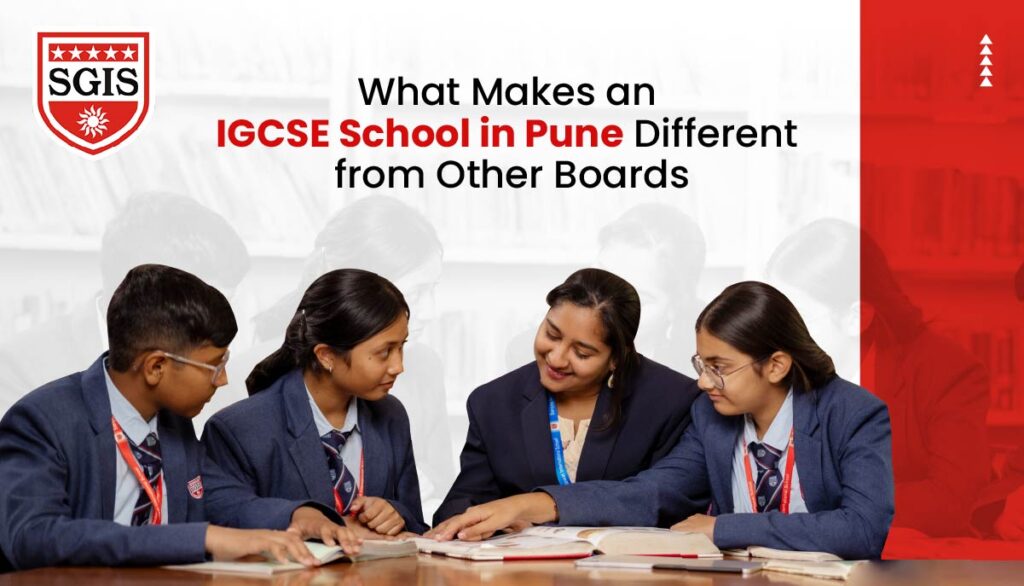
What Makes an IGCSE School in Pune Different from Other Boards

Introduction Education is quietly but steadily evolving. Completing chapters and getting ready for tests are no longer the main priorities. Today’s parents are posing a more significant query. Will my child be ready for what lies ahead with this system? Many families are now investigating overseas curricula that provide a more comprehensive, future-focused approach to education as a result of this change. Among these, the IGCSE framework has drawn notice for striking a balance between theoretical knowledge and real-world application. A globally recognized curriculum created by Cambridge International is offered by an IGCSE school in Pune. It is distinguished not only by recognition but also by the manner in which learning takes place. Pupils are urged to comprehend ideas rather than merely memorize them. They are encouraged to reflect, inquire and apply. The IGCSE method seems different from typical boards. more adaptable. more student-centered. This distinction is precisely what many parents are searching for. Understanding the IGCSE Curriculum What Is the IGCSE Program? Cambridge Assessment International Education created the IGCSE program, an international curriculum. Schools all across the world use it, and it is designed for secondary school pupils. Progressive learning and conceptual clarity are the foundation of the program. Students interact with topics in a way that helps them comprehend concepts rather than just what they are. Global Recognition The IGCSE’s widespread recognition is one of the main factors parents take into account. The curriculum and its evaluation criteria are well-known to universities and other educational establishments worldwide. For students who might think about pursuing higher education outside of India, this recognition offers flexibility. Flexible Subject Choices Students can select from a variety of disciplines under the IGCSE framework, depending on what the school offers. Students can better match their academic choices with their interests and long-term objectives thanks to this flexibility. Key Differences Between an IGCSE School and Other Boards Concept Based Learning Approach IGCSE emphasizes comprehension, in contrast to many older systems that place a strong emphasis on memorization. Students are urged to delve deeply into ideas and make connections between them. Student Centered Teaching Methods An IGCSE school in Pune typically has more engaging classrooms. Students actively engage with the material, ask questions, and take part in conversations. Learning is no longer a one-sided process but rather a two-way one. Continuous Assessment System One final test is not the only means of assessment. Assignments, coursework, and scheduled tests are used to assess students. This makes it possible to measure growth in a more consistent and balanced manner. Benefits of Studying in an IGCSE School in Pune 1.Skill Development And Critical Thinking Skills Pupils in Pune are urged to analyze data and take a rational approach to issues. They gain clarity and self-assurance in managing academic obstacles as a result. 2.Exposure to International Academic Standards In Pune, the Cambridge curriculum adheres to globally aligned frameworks. Students experience international recognition and a strong understanding of academic standards. 3.Preparation for Global Higher Education IGCSE schools in Pune help students develop the study habits necessary for postsecondary education. Structured learning, independent study, and subject clarity enable smoother transitions into university institutions. Skills Students Develop Through the IGCSE Curriculum Analytical and Problem Solving Skills Pupils gain the ability to assess data, spot trends, and use rational solutions. Regular academic work, as opposed to isolated tasks is how these skills are acquired. Communication and Collaboration Students can effectively communicate their ideas and collaborate with others through conversations in groups, presentations, and project work. This gradually increases communication confidence. Research and Independent Learning Students are encouraged to delve deeply into subjects via the curriculum. They acquire the skills necessary to compile, arrange, and present data in an organized manner. This fosters learning freedom. Why Parents Are Choosing an IGCSE School Because IGCSE schools in Pune provide both flexibility and a solid academic foundation, parents frequently select them. Future academic pathways are reassured by the curriculum’s worldwide prominence. Balance is another factor. Both scholastic learning and extracurricular growth are supported by the IGCSE framework. Textbooks are not the only resources available to students. Families thinking about sending their children abroad can benefit from the curriculum’s familiarity and conformity to international norms. Long-term planning is made simpler as a result. Factors to Consider When Choosing an IGCSE School Parents should start with accreditation when choosing an IGCSE school in Pune. The program is given as intended thanks to Cambridge’s relationship. The experience of faculty members is equally significant. How well students interact with the subject is greatly influenced by the quality of the instruction. Academic experience is supported by learning resources and infrastructure. Learning is improved by well-equipped labs, classrooms, and activity areas. Opportunities for skill development and extracurricular activities are also important. Overall development, not just academic achievement, is supported by a balanced environment. Conclusion An alternative method of instruction is provided by an IGCSE school in Pune like SGIS. It shifts the emphasis from memorization to comprehension, application, and autonomous thought. The curriculum gives students more clarity and confidence as they prepare for future academic courses thanks to its worldwide recognition and disciplined learning framework. The IGCSE approach offers a fair and forward-thinking choice for parents who want to explore beyond traditional systems. Students differ not only in what they learn but also in how they learn it. FAQs What makes an IGCSE school in Pune different from other education boards? Unlike traditional boards that frequently rely on memorization and set patterns, an IGCSE school in Pune emphasizes conceptual understanding, free topic options, and ongoing assessment. What are the benefits of studying in an IGCSE school in Pune? Global recognition, solid academic fundamentals, advanced skills, and exposure to worldwide learning standards are all advantageous to students. How does the IGCSE curriculum support global education opportunities? The curriculum is well-known and develops abilities like communication, critical thinking, and self-directed learning—all of which are necessary for international education. Is the IGCSE board suitable for students planning to study abroad? Yes.The IGCSE curriculum facilitates students’

Cambridge International Schools in Pune | SGIS Pune
blogs

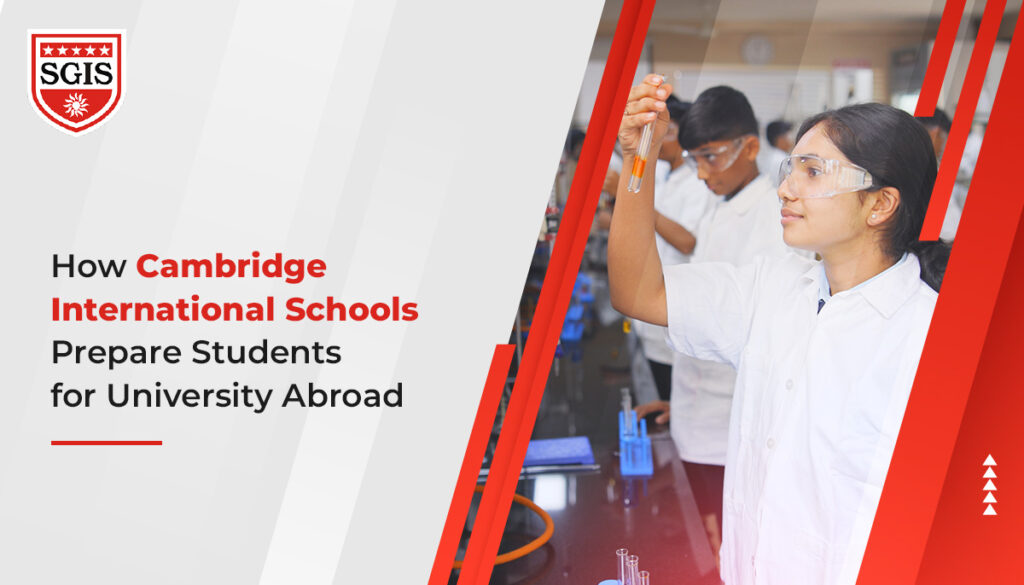
How Cambridge International Schools Prepare Students for University Abroad

Introduction Students are increasingly thinking about studying abroad for their tertiary education these days. Studying overseas is now a regular choice. For many families, it is an early and deliberate goal. This growth has also altered how parents evaluate elementary and secondary schools. Cambridge International Schools are often considered by families who want global academic alignment from the start. These schools follow a globally structured curriculum that prioritizes understanding, application, and critical thinking. The goal of the learning technique is to prepare students for both tests and more complex study environments. In Pune, Cambridge international schools have been becoming more and more well-liked. In addition to helping to prepare their children for life at an international institution, parents are looking for programs that offer academic depth and structure. Pune’s IGCSE board schools support this aim by offering globally recognized pathways that help students progressively get ready for postsecondary education abroad. What Is the Cambridge Curriculum? Cambridge Assessment International Education created the global academic framework known as the Cambridge curriculum. Students from early childhood through secondary school are supported by this phased learning approach. Fundamentally, the Cambridge international curriculum emphasizes conceptual comprehension, organized problem solving, and critical thinking. Asking questions, analyzing data, and applying concepts in various circumstances are all encouraged for students. Learning is more than just memorizing facts from a textbook. It is based on logic and clarity. Higher education overseas frequently requires students to think freely and communicate their ideas clearly, therefore this is important for university preparation. The Cambridge curriculum encourages these behaviors at a young age. Discussion, interpretation, and written explanation are common classroom activities that reflect university-style requirements.   When students apply to overseas universities, the curriculum also gives them familiarity and credibility because it is internationally recognized and globally aligned. Teams in charge of admissions are aware of the framework and its evaluation criteria. Cambridge International Curriculum Structure Cambridge Primary and Lower Secondary The goal of the Cambridge Primary and Lower Secondary curricula is to lay solid foundations. Students improve their reasoning and communication skills while also developing fundamental language, math, and scientific capabilities. At these levels, learning is gradual and concept-driven. Students gradually increase their comprehension of the material rather than racing through it. Learning experiences that combine academic and extracurricular pursuits promote holistic growth. IGCSE Programme (Upper Secondary) The upper secondary level in the Cambridge framework is the IGCSE program. It is regarded as a solid academic credential and is generally recognized across nations. With the topic flexibility offered by IGCSE, students can select courses according to their interests and career goals. Structured tests and, in many disciplines, homework components are part of assessment. This results in a fair assessment. The IGCSE’s depth and structure fit very nicely with the requirements of international universities, particularly with regard to exam criteria and subject comprehension. Key Benefits of Studying in Cambridge Board Schools in Pune Pune’s Cambridge Board Schools blend local accessibility with international academic standards. While learning in a familiar urban setting, students gain from international academic alignment. International exposure through curricular content and teaching methodology is a significant advantage. Students frequently interact with case studies, global contexts, and viewpoints from a variety of topic areas. This increases scholarly awareness. A solid academic background is an additional benefit. The Cambridge curriculum fosters analytical skills and topic clarity, both of which help students succeed in college. Soft talents are also given consideration. Students gain leadership and communication skills through project work, presentations, and class debates. In international university environments, where involvement and articulation are crucial, these abilities are frequently regarded as crucial. How Cambridge International Schools Prepare Students for University Abroad It takes time to prepare for a university abroad program. It grows as a result of exposure and regular academic habits. This is supported by Cambridge International Schools’ guided academic advancement and planned instruction. Students are encouraged to work on subject-based projects and research-oriented assignments. These experiences help students become more at ease with longer academic assignments and disciplined thought processes. Students eventually learn how to arrange their thoughts and communicate them in an understandable manner. Mentoring and advice regarding academic direction and pathways to further education are also offered by numerous Cambridge schools. As they investigate their interests in subjects and potential areas of study, students receive assistance. The Cambridge curriculum places a strong emphasis on English communication in all subject areas. Frequent explanation, presentation, and writing all contribute to the development of language confidence, which is crucial for international colleges. School life frequently incorporates extracurricular activities as well. Engaging in groups, athletics, and artistic endeavors promotes the development of a well-rounded profile. Why Parents Prefer the Best IGCSE Schools in Pune Additionally, a lot of Cambridge schools offer mentorship and advice regarding academic direction and pathways to higher study. Students are assisted as they investigate their interests in subjects and potential areas of study in the future. In all of the areas included in the Cambridge curriculum, English communication is essential. Language confidence is bolstered by regular writing, explanation, and presentation—all of which are critical for international colleges. Additionally, extracurricular activities are frequently incorporated into school life. Club membership, athletic participation, and artistic endeavors all promote the development of a well-rounded profile. When the school curriculum already conforms to international standards, families who are considering sending their children to school abroad frequently feel more secure. Tips for Parents Choosing a Cambridge International School in Pune When choosing an international school, parents should first confirm the school’s formal Cambridge affiliation. A valid accreditation attests to the curriculum’s and tests’ compliance with the necessary requirements. The caliber of the faculty is equally critical. Parents frequently consider classroom management, subject matter expertise, and teaching experience before making a decision. Curriculum that is delivered correctly is most effective. Moreover, infrastructure facilitates results. Libraries, labs, and classrooms with technology facilitate students’ engagement with academic material. Some families also review what kind of higher education guidance the school provides. While approaches differ, clarity around academic progression

IGCSE school in pune | SGIS
blogs

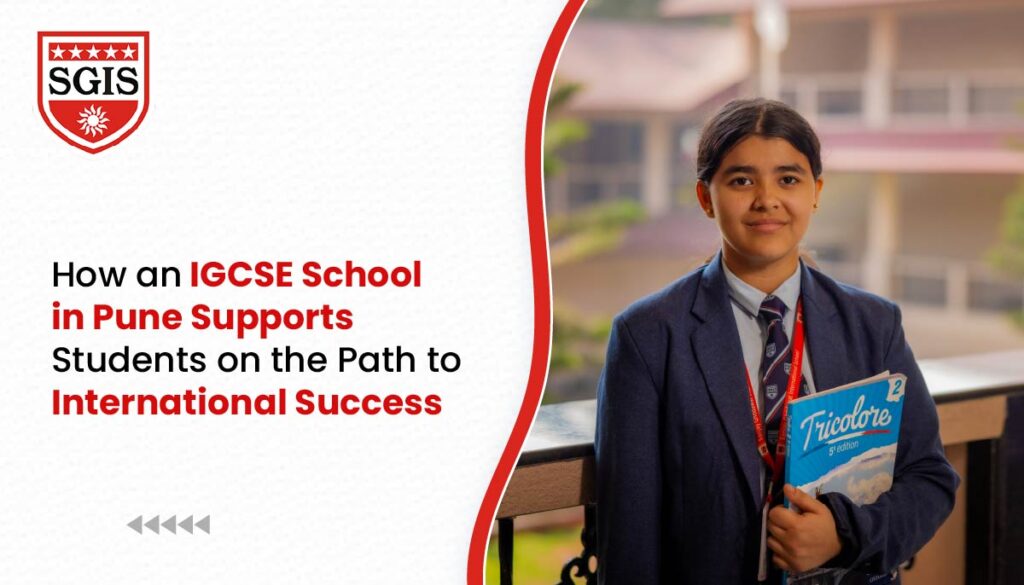
How an IGCSE School in Pune Supports Students on the Path to International Success

Introduction Today, geography is no longer a barrier to education. There is a growing expectation that what pupils learn in school will prepare them for opportunities in other nations, cultures, and academic systems. Naturally, parents are asking various questions and have begun to seek beyond established curricula. Will my child be able to adjust anyplace with this education? Will it improve comprehension rather than just test scores? International curriculum, particularly those that emphasize skills and long-term preparedness, have gained prominence as a result of this change. One such option that parents are eagerly considering is the Cambridge international school framework. The need for education that is globally aligned has been gradually increasing in Pune. A lot of families are now thinking about attending an IGCSE school in Pune because of its methodical yet adaptable approach. IGCSE board schools in Pune are said to provide a good foundation for students who might pursue higher education in India or outside since they strike a balance between academic depth and practical learning. Understanding Cambridge Curriculum 1. What is the Cambridge IGCSE Program? Cambridge Assessment International Education is responsible for creating the Cambridge IGCSE curriculum. It is a widely accepted curriculum that supports secondary education and is used in schools throughout numerous nations. The curriculum enables students to interact with concepts in an organized manner and focuses on developing subject understanding. It encourages information clarity, interpretation, and application rather than restricting learning to textbook memorization. 2.Core Subjects and Flexible Learning Options Subject flexibility is one of the IGCSE framework’s distinguishing characteristics. Depending on what the school offers, students can typically select from a variety of disciplines in the humanities, sciences, and languages. This enables students to match their coursework to their future academic goals and areas of interest. Instead of adhering to a strict framework, students can investigate topics in which they are academically good or naturally inclined. 3. Focus on Concept Based Learning The IGCSE curriculum prioritizes comprehension over memorization. Pupils are urged to examine concepts, think critically, and make logical links between various subjects. This method aids in the development of subject clarity and gets students ready for subsequent, more challenging academic work. Why Parents Prefer an IGCSE School 1. Internationally Recognised Qualification Universities all across the world accept the IGCSE. This widespread acceptance facilitates easier transitions into foreign academic institutions and offers students choice in selecting higher education routes. 2.Holistic Academic Development Academics and extracurricular activities are usually balanced in an IGCSE school in Pune. In addition to their academic education, students are encouraged to engage in extracurricular activities like athletics and the arts. This harmony promotes general growth and gives kids self-assurance outside of the classroom. 3.Future Ready Skills Development IGCSE’s learning methodology fosters abilities including teamwork, communication, and critical thinking. These are formed through regular academic work and classroom interaction rather than being taught individually.  Students grow more at ease communicating their thoughts, collaborating with others, and managing prescribed academic assignments over time. Key Features of a Cambridge International School 1. Global Curriculum Standards The curriculum of a Cambridge international school is in line with global standards. This guarantees uniformity in learning objectives and academic standards across various geographical areas. 2. Student Centered Learning Approach Participation and curiosity are usually encouraged in the educational setting. Pupils are active learners. They are supposed to participate, ask questions and actively investigate concepts. 3. Continuous Assessment Methods Final exams are not the only form of assessment used in Cambridge schools. A combination of coursework, projects, and formal exams are used to evaluate students, providing a more comprehensive picture of their development. How IGCSE Board Schools in Pune Prepare Students for Global Opportunities 1. Preparation for International Universities Pune’s IGCSE board schools offer a solid academic foundation that facilitates international higher education options. Students acquire organized study habits and subject clarity that meet university requirements. 2. Exposure to Global Perspectives Students are exposed to global contexts through class discussions and curricular content. They are better able to comprehend various viewpoints and adjust to a variety of settings as a result of this experience. 3. Development of Real World Skills Students regularly engage in tasks that involve problem solving, research, and presentation. These experiences build confidence and prepare them for academic and real-world challenges. Benefits of Studying in an IGCSE School in Pune 1. Access to High Quality International Education Students follow a globally recognised curriculum designed by Cambridge International. This ensures that learning remains aligned with international academic standards. 2. Balanced Focus on Academics and Personal Growth The programme supports both academic development and personal growth. Students are encouraged to build skills, interests, and confidence alongside subject learning. 3. Opportunities for Global Academic Pathways IGCSE qualifications open pathways to higher education across countries. Students can explore a wide range of academic options after completing their schooling. Factors to Consider When Choosing an IGCSE School in Pune Parents frequently start with accreditation while choosing an IGCSE school in Pune. Confirming Cambridge affiliation guarantees that the program is taught as planned. Another crucial element is the caliber of the faculty. Effective learning is influenced by classroom participation, subject matter competence, and teaching methodology. Infrastructure is equally important. Academic engagement is supported by having access to labs, libraries, and educational materials. Opportunities for extracurricular activities help students grow even further. Some families also consider how schools support academic progression and future planning. While approaches differ, clarity around learning pathways can be useful. The Role of IGCSE Education in Shaping Global Citizens Academic preparedness is only one aspect of IGCSE education. It encourages the growth of consciousness, self-reliance, and flexibility.Students are exposed to a variety of viewpoints and ideas, which fosters cross-cultural understanding. They get the ability to approach issues carefully and take into account various points of view. Students develop into more autonomous learners throughout time. They take responsibility for their work and grow self-assured. These attributes are crucial for both navigating international surroundings and pursuing higher education. Conclusion A student’s academic path is significantly

Cambridge International School in Pune | SGIS
blogs

Why Choose a Cambridge International School in Pune in 2026: Benefits & Outcomes

In India, international education is no longer viewed as a backup plan. It has become a conscious and early decision for many families. Parents are examining their children’s learning styles, cognitive abilities, and ability to adjust to future academic and professional settings. This change is particularly noticeable in Pune. It is anticipated that more parents would consider globally aligned programs by 2026, moving beyond typical boards. Exam-only success is gradually giving way to skill preparedness and long-term academic flexibility. A Cambridge International School is an example of such a route. Well-known for its concept-driven learning methodology and structured global framework, the Cambridge model promotes consistent academic growth across the phases. The Cambridge international curriculum and IGCSE courses are being carefully considered by many parents who are considering long-term results, not simply when choosing a school. What Is the Cambridge Curriculum and Why It Matters in 2026 Cambridge Assessment International Education created the Cambridge curriculum, an academic framework that is globally aligned. Students from early childhood through secondary education are supported by its progressive learning pathway framework. The focus on application-based learning and conceptual clarity in the Cambridge international curriculum is what sets it apart. Instead of depending solely on memorization, students are urged to comprehend concepts, make connections between ideas, and apply their knowledge. Discussion, logic, and problem solving are frequently the main topics in the classroom. This strategy is important in 2026 and beyond since future academic and professional pathways will increasingly value flexibility and critical thinking. The Cambridge curriculum encourages these behaviors at a young age. Pupils gain knowledge on how to organize their ideas, make arguments and deal with new issues. Additionally, the framework is applicable worldwide. It facilitates advancement to various higher education routes and is acknowledged in all nations. This worldwide alignment adds useful value for families making flexible plans for the future. Why Pune Is Emerging as a Hub for Cambridge Board Schools Pune has always been known as a city that prioritizes education. It is a popular place for schooling and higher education because of its academic culture, welcoming atmosphere for students, and institutional depth. Additionally, the number of international schools in the city has steadily increased. A Cambridge International School in Pune has seen growing demand as parent awareness and preference for International curricula continue to rise. Compared to a decade ago, families are now more informed and thoughtful in their curriculum choices. The availability of educators is another factor that makes Pune unique. Teachers with training and experience who are at ease teaching international curricula are drawn to these schools. This improves the quality of implementation, which is just as important as affiliation. Pune’s parents and kids are increasingly choosing globally-aligned education that provides a variety of options for the future. This wider change in expectations is reflected in the city’s adoption of the Cambridge International School model. Key Benefits of Choosing a Cambridge International School in Pune 1. Global Recognition That Opens University Doors The Cambridge curriculum adheres to benchmarks and international norms. It facilitates higher education pathways in India and abroad and is widely understood by universities. 2. Concept-Based Learning Over Memorisation Understanding and application are the main goals of learning. Instead of memorization, students are encouraged to think, question, and investigate on their own. 3. Flexible Subject Combinations for Future Careers Learners can choose subjects aligned with their interests and career goals. This flexibility supports diverse pathways in science, commerce, arts, and emerging fields. 4. A Structured Pathway from Primary to A Levels The curriculum offers a seamless progression from early years to Cambridge International A Levels. Each stage builds academic depth and independent learning skills. 5. Assessment That Builds Real Academic Strength  IGCSE programmes combine subject depth with structured assessment. The best IGCSE schools in Pune typically balance classroom learning with exam readiness. 6. Critical Thinking and Independent Learning Skills Students are encouraged to question, research, and think analytically. This nurtures confidence, problem-solving ability, and self-directed learning habits. 7. Strong Preparation for International and Indian Universities The curriculum aligns with global academic standards while remaining relevant to Indian higher education requirements. Students are well-prepared for competitive university admissions. 8. International Exposure with Cultural Awareness Learners gain a global perspective while respecting local values and cultures. This balance helps them become open minded and culturally aware individuals. 9. Holistic Development Beyond Academics Equal importance is given to co-curricular activities, leadership, and life skills. Students grow socially, emotionally, and intellectually. 10. Measurable Academic and Personal Outcomes Clear learning objectives and structured assessments track progress effectively. Parents can see tangible academic growth along with personal development. Outcomes Parents Can Expect from the Best IGCSE Schools in Pune Exam results are not the only thing parents look for while selecting top IGCSE board schools in Pune. They look for their children to exhibit learning independence and evident academic confidence. Generally speaking, students gain confidence in their ability to articulate their thoughts, handle in-depth material, and independently complete assignments. This fosters learning ownership and self-direction throughout time. Academic results typically show conceptual clarity as opposed to memorization. Due to exposure and subject selection, students frequently establish more distinct academic preferences and early career paths. A more seamless transition to higher education is another anticipated result. The learning habits formed throughout the IGCSE years typically aid in adjustment, regardless of whether students pursue the IB, other foreign programs, or university courses. Choosing the Best Cambridge International School in Pune It takes more than just looking at labels to choose the best Cambridge International School in Pune. In order to verify the legitimacy of the curriculum, parents typically start with accreditation and formal Cambridge affiliation. Teaching methods and faculty experience are equally important. Parents frequently examine the methods used to teach subjects, evaluate pupils, and offer academic support. Support from extracurricular activities and infrastructure are also important. Libraries, labs, learning areas and facilities for activities all enhance the entire student experience. Lastly, families frequently examine the growth and results of their children. A

Cambridge International School in Pune | SGIS
blogs

What Is a Cambridge International School? A Complete Guide for Parents in Pune

Global education is no longer a specialty in India. Parents who are planning their children’s long-term academic paths are increasingly incorporating it into their decision-making processes. Nowadays, a lot of families seek beyond standard boards and investigate programs that develop skills, flexibility, and preparedness for life abroad. This change is readily apparent in Pune. Parents are looking for flexible learning methods together with structured global standards, which has increased demand for Cambridge International Schools. Families are asking questions about their children’s learning, thinking, and knowledge application skills rather than just grades. Parents who want stable academic foundations with worldwide recognition frequently look toward the Cambridge International curriculum. It is viewed as a route that advances the objectives of both Indian and foreign higher education. The first step to making a solid decision for parents weighing their alternatives is to comprehend how Cambridge schools operate. What Is a Cambridge International School? Programs created by Cambridge Assessment International Education are followed at a Cambridge International School. These educational institutions are a part of a global network and use an academic framework that is Internationally aligned and intended for students in the early childhood through senior secondary grades. Cambridge schools are well-known for upholding uniform academic standards throughout several nations. Instead of focusing solely on memorization, the curriculum aims to promote comprehension, critical thinking, and topic clarity. Over time, students are guided to investigate ideas, pose questions, and develop organized knowledge. Designing curriculum frameworks, learning objectives, and assessments that local schools use is the responsibility of Cambridge Assessment International Education. While still enabling schools to modify their teaching strategies to fit their unique situation, this guarantees worldwide alignment. Cambridge International School students frequently follow a variety of postsecondary educational options. The curriculum is widely accepted and facilitates admission to institutions and programs around the world. This widespread acceptance is crucial for families preparing for variable academic futures. Understanding the Cambridge Curriculum The Cambridge curriculum is not a single board test system, but rather a foundation for ongoing study. It facilitates the development of abilities over time and enables students to advance through the grades. The Cambridge curriculum places a strong emphasis on skills and learner-centeredness. Pupils are urged to comprehend concepts, put them into practice, and clearly communicate their thoughts. Discussion, problem solving, and subject exploration are usually prioritized in classrooms. Though not inflexible, the method is structured. Flexibility is a key distinction between the Cambridge curriculum and several older Indian boards. Cambridge programs offer a greater selection of subjects and a variety of evaluation techniques, whereas Indian boards frequently adhere to set subject structures and exam patterns. This allows students to explore their talents and schools to modify their teaching methods. The Cambridge International Curriculum maintains academic depth while accommodating a range of learning styles and speeds. This harmony between rigidity and flexibility is a major factor in the decision made by many parents. Cambridge International Curriculum Structure Cambridge Primary Programme Language, math, and science basic abilities are the main focus of the Cambridge Primary Programme. At this point, learning is based on basic academic habits, clarity, and interest. Building solid learning foundations and self-assurance in fundamental areas is the aim. Cambridge Lower Secondary Programme Cambridge Lower Secondary adds more subject depth to the elementary stage. As they continue to hone their analytical and communication skills, students start to handle increasingly structured academic material. The structure facilitates seamless academic advancement. Cambridge IGCSE Programme The Cambridge IGCSE Programme is widely accepted worldwide and is intended for secondary school pupils. It provides academic depth and subject choice. Structured tests and homework components are part of assessment. Students who value conceptual clarity and globally benchmarked standards should consider the IGCSE. How to Choose an IGCSE School in Pune? Selecting an IGCSE school in Pune requires more than just looking up affiliations. Subject options, academic atmosphere, instructor quality, and overall student support systems are often the things that parents consider. The Pune educational system has seen a steady increase in IGCSE instruction. More families are now aware of its adaptable structure and worldwide importance. Cambridge International School in Pune stands out for offering internationally benchmarked education with local convenience. Families with worldwide mobility or those thinking about pursuing further education abroad may find IGCSE to be a good fit. The curriculum facilitates cross-regional recognition and transferability. Parents frequently consider the learning environment, the faculty’s style, and the school’s capacity to foster conceptual learning when choosing a school. More important than brand labeling is a good fit. An ideal setting facilitates the curriculum’s effectiveness. Key Benefits of Choosing Cambridge Board Schools in Pune 1. Globally Recognised Curriculum Universities all throughout the world acknowledge and comprehend the Cambridge curriculum. Diverse higher education pathways are supported by its International alignment. 2. Conceptual and Application Based Learning The emphasis is still on comprehension and use. Instead than just memorizing concepts for tests, students are urged to work with them. 3. Student Centric Assessment System Assessment includes a mix of evaluation formats. This allows a more balanced measure of subject understanding rather than one time performance. 4. Strong Foundation for Higher Education IGCSE provides a solid academic base for advanced programmes such as IB and other International pathways. It builds subject clarity and study discipline. 5. Holistic Development Approach The implementation of Cambridge programs typically takes life skills and extracurricular learning into consideration. Students advance academically while honing their reasoning and communication skills. Conclusion A Cambridge International School provides a skill-focused, globally aligned, and disciplined academic path. It is seen by many families as a well-rounded approach to contemporary education, where comprehension is just as important as performance. Parents frequently have long-term goals in mind when searching for Cambridge International School in Pune. Learning habits, confidence, and academic results can all be shaped by the correct school. Families can plan future paths with greater flexibility and clarity when they investigate Cambridge education early. FAQs What is a Cambridge International School? A Cambridge International School follows programmes designed by Cambridge Assessment

Benefits of a Residential IBDP School in Pune | SGIS
blogs

Top 10 Benefits of a Residential IBDP School for Integrated Student Development | SGIS Pune

By the time students reach Grades 11 and 12, things change. School transforms from a simple morning routine into a space that shapes their thinking, daily organization and confidence about the future. Parents notice this shift, too. Their questions evolve. Is my child ready for higher studies? Can they handle pressure on their own? Are they learning to think, not just memorize? At this point, many families start to look closely at the International Baccalaureate Diploma Programme. The IBDP is noted for its academic rigor and for requiring students to take charge of their learning. When combined with a residential school setting, the impact is often more significant. In Pune, a city known for its educational culture, residential IB schools have become a popular choice for senior secondary education. Sanjay Ghodawat International School, as an IBDP School in Pune, offers this combination in a space designed for focus, structure, and growth. Is the IB Diploma Programme for Grades 11–12? The International Baccalaureate Diploma Programme is a two-year programme for students in Grades 11 and 12. It encourages students to understand concepts deeply instead of rushing through material. Learning is meant to be thoughtful, organized and continuous. The IBDP curriculum for Grades 11 and 12 exposes students to various academic areas. This approach helps them gain clarity in language, confidence in analysis and a broader awareness of the world. Assessment isn’t limited to a single exam at the end. Students are evaluated throughout the programme, keeping learning consistent and meaningful. Many parents appreciate the IBDP for its International recognition. Universities understand the academic challenges of the programme. Students who complete it generally feel comfortable managing independent study, planning their work and meeting academic expectations, skills that are important beyond school. Why Choose a Residential IBDP School in Pune? Pune has built its reputation as an education-centric city over the years. It offers a calmer, more grounded academic atmosphere than many larger cities. For students in Grades 11 and 12, this environment can be significant. A residential IB school in Pune provides structure within this setting. When students live on campus, their days follow a rhythm. Study time, activities, meals and rest all have their designated times. This predictability aids students in staying organized, especially during a demanding programme like the IBDP. Living away from home, even for a brief time, also teaches valuable life lessons. Students learn to manage their time, take charge of their routines and adapt to shared spaces. These experiences often prepare them well for the independence required in higher education. Top 10 Benefits of Choosing a Residential IBDP School 1. A Clearly Designed Academic Structure The IBDP provides a clear academic framework. Students set their goals and receive systematic guidance throughout the programme. 2. Fewer Distractions, Better Focus Residential campuses limit daily distractions. With set times for studying, students find it easier to concentrate and stay consistent. 3. Learning That Goes Beyond Books School life includes more than classroom lessons. Students pursue interests, remain active, and engage in activities that support their overall growth. 4. Familiarity with Higher Education Expectations The IBDP prepares students for university by developing critical thinking, independent learning and strong research skills. 5. Development of Daily Discipline A residential routine builds natural structure. Over time, students learn to plan their days and manage their responsibilities. 6. Regular Academic Guidance Teachers stay involved in the learning process. Ongoing interaction helps students gain clarity and boost their confidence in subjects. 7. Exposure to Motivated Peer Groups Living and studying with peers who share similar goals creates an atmosphere of shared learning and mutual support. 8. A Secure and Supervised Campus Residential schools prioritize safety and wellbeing. Supervision and care help students feel settled and supported. 9. Facilities That Support Learning and Activity Purpose-built learning spaces and activity areas provide students with the chance to balance academics with physical and creative pursuits. 10. Comfort with Different Academic Environments The international focus of the IBDP helps students adjust to diverse academic settings, whether in India or abroad. Why SGIS Is a Preferred Residential School in Pune for IBDP Sanjay Ghodawat International School Mulshi, Pune stands out as a leading residential school in Pune, offering an environment where structure, independence, and personal growth develop together. Living on campus helps students build responsibility, discipline, and confidence while being part of a supportive and well-supervised community. The school follows an internationally aligned academic framework designed to meet global education standards. Dedicated faculty members provide close academic guidance during Grades 11 and 12, ensuring students are well-prepared to meet the demands of the IBDP curriculum while maintaining a balanced residential life. At SGIS, education goes beyond academics. The focus is on nurturing well-rounded, self-aware individuals who are confident, resilient, and ready for admission to leading global universities and future success. Conclusion Grades 11 and 12 mark a transition phase. The right environment during these years can influence how students approach learning, responsibility, and independence. A residential IBDP school offers the structure and focus necessary at this stage. With Pune’s established educational culture and SGIS’s residential approach, families looking for an IB School in Pune have a significant option to consider. For many students, this combination forms a strong foundation for what is to come. FAQs Is the IBDP suitable for Grades 11 and 12? Yes. The IBDP is designed for senior secondary students and emphasizes academic understanding, consistency, and preparation for higher education. Does residential schooling benefit IBDP students? Residential schooling provides routine and structure, supporting students in meeting the academic expectations of the IBDP. Which IBDP school in Pune should parents consider? The choice depends on the academic approach, campus environment, and student support. SGIS is often preferred for its residential setting and international curriculum. What options exist after completing the IBDP? Students can pursue higher education in India or abroad in various academic fields. How does SGIS support students during the IBDP? SGIS offers a structured residential environment, academic guidance and a balanced school experience focused on student

IBDP Residential Schools in Pune | SGIS
blogs

How IBDP Residential Schools Prepare Students for Global Universities

Introduction In recent years, there has been a consistent increase in the number of students applying to international universities. Parents are looking at more than just destinations or rankings. They are posing more in-depth queries regarding preparedness. Is my child academically ready for an international classroom? Can they handle pressure, independence, and new systems? Selecting the appropriate Senior High School is the solution for many families. The International Baccalaureate Diploma Programme has drawn praise for its intellectual depth and global perspective. The preparation is more thorough when this program is provided in a residential school environment. IBDP residential school in Pune gives learners the chance to grow intellectually while learning how to be independent, responsible, and structured. Sanjay Ghodawat International School implements this approach in Grades 11 and 12 by integrating global curriculum standards with a residential environment that promotes focused learning and individual development What Is the IBDP Curriculum and Why Universities Prefer It Students in Grades 11 and 12 can enroll in the two-year International Baccalaureate Diploma Programme. Instead of prioritizing memorization for tests, it focuses on assisting learners in gaining a thorough understanding of subjects. Learning is ongoing, methodical, and introspective. Students are encouraged to approach things thoughtfully via the IBDP curriculum. It is expected of students to independently analyze, apply concepts, and organize their work. The expectations that students may encounter in foreign universities are very similar to this method. The IBDP’s academic framework is well-known to universities worldwide. They acknowledge the degree of accountability students have for their education as well as the regularity of assessments. The IBDP emphasizes comprehension, communication, and academic rigor more than rote-based methods. These attributes frequently facilitate students’ easier adjustment into international higher education settings. Role of a Residential IB School in Student Development Students’ development during their Senior Secondary years is greatly influenced by residential IB schools. Everyday life becomes more structured when one lives on campus. There is a regular rhythm to academic calendars, study time, activities, and relaxation. Students benefit from this structure by learning discipline and time management skills, both of which are crucial for being ready for overseas colleges. Students have the ability to organize their schedules, fulfill deadlines, and manage their personal and academic obligations. Independent learning is another benefit of residential schooling. Students are encouraged to take charge of their routines and choices while being mentored in a supervised setting when they are away from home. Over time, this freedom fosters maturity and self-assurance, traits that colleges respect just as highly as academic achievement. Academic Rigor That Matches Global University Standards The academic rigor of the IBDP is one of its advantages. Subjects are taught in-depth, encouraging students to delve deeply into ideas rather than skimming the material. This depth is in line with what is expected by international universities. The IBDP is continuously being assessed. In order to keep learning consistent throughout the curriculum, students are assessed using organized internal and external procedures. Students are better prepared for the ongoing assessment techniques that are frequently employed in foreign universities through this structured approach. Additionally, research-based learning is encouraged by the academic method. Students gain confidence in managing larger academic assignments, clearly explaining concepts, and organizing material. When students transfer from school to international university settings, these experiences aid in closing the adjustment gap. University-Focused Mentorship and Career Guidance Academic preparedness alone is not enough to prepare for international university entrance. In order to comprehend their alternatives and make wise judgments on their future, students require guidance. Mentorship is emphasized in Grades 11 and 12 at IBDP residential schools. As they investigate their academic interests and potential career paths, students receive systematic assistance. They are better able to comprehend expectations and carefully consider their next course of action thanks to this support. Clarity and readiness continue to be prioritized over pressure. Students learn how to confidently present their academic progress through consistent contact and guidance. They can approach foreign admissions with more awareness and organization because of this method. Development of Global Skills Required by Universities Students that are capable of autonomous thought, effective communication, and environmental adaptation are sought after by international colleges. The IBDP’s learning methodology facilitates the growth of these abilities. Students are taught to solve problems, analyze circumstances, and clearly communicate their thoughts. This gradually increases self-assurance in decision-making and communication. These abilities are further strengthened by living in a residential situation, where students regularly engage with peers from different backgrounds. Students gain cultural awareness and flexibility when they are exposed to diverse viewpoints. These experiences help children get ready for international classrooms where cooperation and tolerance are crucial. Why SGIS Is a Preferred IBDP Residential School in Pune The residential setting at Sanjay Ghodawat International School encourages academic concentration and individual accountability. Students can progressively gain freedom while adhering to a strict regimen due to the campus layout. The school adheres to global education standards by using an international academic approach. Throughout Grades 11 and 12, teachers work closely with students to guide them through the demands of the classroom while preserving a healthy balance. SGIS gives students the opportunity to develop both intellectually and personally through its residential facilities and student-focused atmosphere. Students feel more prepared when they transition to foreign higher education because of this well-rounded approach. Conclusion It takes time to get ready for admission to a foreign university. It entails being prepared academically, exercising self-control, and being able to adjust to new situations. This approach is supported by an IBDP residential school, which blends structured education with practical responsibility. A residential IBDP pathway is a thoughtful method for families thinking about sending their children to an IB school in Pune to get them ready for a global education. SGIS is a great choice for students who want to attend institutions overseas because of its worldwide academic approach and structured campus environment. Looking for the best IBDP School in Pune to prepare your child for global university admissions? Contact SGIS Pune today to learn

blogs

Benefits Of Educational Games For Children

Educational games come across as one of the best choices for students. These games are super fun and help kids to learn while also playing.  They combine learning and fun together, so kids can get better at school and develop important skills. Apart from this, there are a range of benefits of educational games for kids. When children play educational games, they can comprehend concepts better and remember what they have studied. Moreover, parents and teachers are also realizing the importance of such games and incorporate them into the daily routines of the child. Through this blog, let’s look at why educational games are so engaging and interesting. Table of Contents What Are Educational Games? Benefits of Educational Games for Child Development 1. Develop Focusing Ability 2. Improves Memory  3. Makes Learning Fun and Engaging  4. Supports Classroom Learning  5. Increases Motivation to Learn  6. Helps Kids To Work Together and Cooperate  7. Supports Social and Emotional Skills  8. Improves Problem-Solving Skills  What Are Educational Games? Educational games are unique games that help kids to learn. They are used in classrooms to make study more interesting and exciting. Teachers use these games to make students understand different subjects like math, reading, and science. When kids play educational games, they learn new things in a fun manner. These games are part of a teaching method called game-based learning. This method uses games to teach important lessons. Schools today incorporate several educational games for child development. Benefits of Educational Games for Child Development Educational games play a key role in shaping a student’s personality. Here are some key benefits: 1. Develop Focusing Ability Games can make kids focused. Some people think that games distract kids, but research shows that playing games can actually make them pay more attention. Some studies show that when kids play educational games, they learn to stay alert and focus for a long time. So after playing a game, kids might find it more comfortable to focus on other things too. 2. Improves Memory  When talking about the benefits of educational games, it also helps kids to remember things easily. Many studies show that games, especially video games, can improve a kid’s memory. Kids who play games frequently can remember more details and keep that information in their brains longer. So, educational games give kids a memory workout while also teaching them new things. 3. Makes Learning Fun and Engaging  Educational games are very much fun, and this fun enables kids to learn more. Kids enjoy playing, and when they play educational games, they learn at the same time. Such motivation makes them learn more while playing. When kids play games, they focus on the learning part because the game makes it exciting. Educational games help kids to remember things because they enjoy the game. Learning through games for kids helps them think about what they are learning in a fun way. 4. Supports Classroom Learning  Educational games are a great way to make kids practice what they learn in school. They can use these games to understand difficult subjects and strengthen lessons in an exciting way. Games allow kids to apply what they have learned and keep them interested in learning. When games are part of a lesson, they make studying feel less like work and more like play, which helps kids learn better. 5. Increases Motivation to Learn  Teachers use educational games for child development such as making them motivated. When kids play a game, they want to succeed and win. This natural desire to do well in the game helps them stay motivated to keep learning. Studies have shown that kids are more motivated to pay attention and join in when games are part of their lessons. 6. Helps Kids To Work Together and Cooperate  Learning to work as a team is very important, and educational games can help with this. Many kids enjoy team games, and these games help them practice working with others. They learn how to take turns, listen to teammates, and respect each other. Learning through games for kids develops cooperation skills that are useful both in and out of the classroom. 7. Supports Social and Emotional Skills  When kids play games, they understand how to communicate with others, share, and interact. Games can make kids feel more confident because they succeed with their teammates and learn from each other. This makes kids feel better about themselves and others. Games also help children understand their emotions and develop social skills, which are important for making friends and getting along with others. 8. Improves Problem-Solving Skills  Educational games teach kids how to solve problems. For example, in some games, kids have to think carefully to figure out solutions. Games teach kids to think creatively and use logic to solve difficult tasks. Educational games for child development help children to practice these abilities in a fun and exciting way. Conclusion  Educational games are amazing tools for helping kids to learn and grow. They make learning more interesting and enjoyable and also help children to build important skills. The benefits of educational games can be explored by incorporating them into a child’s everyday routine. These games help kids to understand concepts, develop problem-solving abilities, and work adequately with others. At Sanjay Ghodawat International School, Pune, we believe in making learning fun and effective through the power of educational games. By incorporating engaging educational games into our curriculum, we make sure that children not only top in their academics but also grow socially and emotionally. Join SGIS today, where learning is a complete adventure for your child. Also Read – The Role of Field Trips in Practical Learning

blogs

The Role Of Field Trips In Practical Learning

In today’s world, practical learning has become an essential part of the educational landscape, as it assists students in applying theoretical concepts to real-world situations. In addition to promoting deep understanding and retention of essential information, practical learning also helps develop valuable life skills that contribute to students’ future success. In today’s fast-paced era, the knowledge gained from books alone is not enough for students and learning opportunities like field trips can significantly assist in preparing them for future challenges. Undoubtedly, the role of field trips in enhancing students’ learning experience is magnificent, as they allow them to engage with practical aspects of theoretical concepts and understand them better. Continue reading this blog and explore the crucial role of field trips in practical learning and how they benefit students. Table of Contents What is Practical Learning? What are Field Trips in Education? Role of Field Trips in Practical Learning: Key Benefits 1. Enhanced Learning Experience 2. Practical Application of Knowledge 3. Skill Development 4. Enhanced Retention 5. Lifelong Love for Learning Planning a Memorable Field Trip: Tips for Teachers What is Practical Learning? Unlike traditional classroom learning, where students are taught concepts through books or other printed texts, practical learning allows them to explore learning opportunities beyond passive learning methods, like lectures and readings. In simple terms, students learn by doing or actively participating in tasks, solving problems, and developing skills from those experiences. Rather than passively learning from subject matter, this engaging learning way allows students to get hands-on experience with theoretical concepts. What are Field Trips in Education? In simple terms, field trips in education are outings or journeys planned by schools for students that are focused on enhancing their learning experience. Among the different practical learning methods, field trips are most loved by students, as these trips allow them to interact, observe, and experience theoretical concepts in real life. During field trips, students are taken to any location outside the classroom, like a museum, natural environments, science centers, cultural landmarks, etc. Through direct observation and engagement with real-world context, students are assisted to make learning experiences more memorable and interactive. Role of Field Trips in Practical Learning: Key Benefits 1. Enhanced Learning Experience The most significant role of field trips in practical learning is that they ensure enhanced learning experiences for students. They serve as the linking bridge that connects classroom learning with practical or real-world applications, making academic concepts more relatable for students. The field trips allow students to actively participate in learning opportunities outside classrooms, ensuring a deeper understanding of complex concepts. Field trips are the most simple yet effective way by which students can create a positive learning environment for students. 2. Practical Application of Knowledge Another role of field trips is that they help students see how the concepts they learn in the classroom are applied to real-life situations, making learning more enjoyable for them. By just reading a textbook or listening to lectures, students cannot completely understand the actual idea behind a theoretical concept. However, field trips allow them to reinforce their knowledge and understanding of the subject matter through observing real-life examples. 3. Skill Development Many field trip activities require students to work together as a team, which assists with the development of collaboration, communication, and problem-solving skills. Developing these valuable skills not only assists them in improving their academic results but also ensures their preparedness to face the complex challenges and issues of high academic levels and careers. Field trips expose students to different environments and situations, helping them to develop the ability to navigate different challenges. 4. Enhanced Retention The other significant role of field trips is enhanced retention. By connecting concept learning to real-world contexts, they help students develop a deeper understanding of concepts that improves their information recalling or retention power. Apart from this, field trips allow students to build lifelong memories with their classmates and teachers. 5. Lifelong Love for Learning Developing a lifelong love for learning in students is essential, as with academic level progressions, a student’s good academic performance becomes dependent on individual dedication and hard work. Field trips spark a sense of motivation and excitement to learn more in students, encouraging them to ask questions, seek answers, and explore new topics. Planning a Memorable Field Trip: Tips for Teachers Teachers must carefully think about how the planned field trip to a location outside the classroom can help students learn the concepts aligned with the curriculum. They must prepare a curated list of pre-trip and post-trip activities, as that will assist them in properly executing their planning and achieving better learning outcomes from this significant way of practical learning. Teachers must discuss the main purpose of the field trip with students and also clearly discuss the rules and expectations with them. To review students’ learning experiences from the field trip, teachers must conduct follow-up activities. Conclusion With so many benefits, the role of field trips for students’ enhanced learning experiences cannot be overstated. They diminish the gaps between classroom learning and real-life experiences, allowing them to improve their memory retention and helping them develop many valuable skills. However, careful planning is required to conduct successful field trips. Teachers must set clear learning objectives, select appropriate destinations, and provide students with background information and rules, ensuring students’ safety and memorable learning experiences. At Sanjay Ghodawat International School, Pune, a team of dedicated faculty believes that the power of practical learning cannot be overstated in providing students with the best possible learning. By conducting meaningful and safe field trips, the teachers ensure students gain good knowledge about implementing theoretical concepts into real-life situations. Also Read – The Impact of Audiobooks on Early Childhood Learning

Scroll to Top