
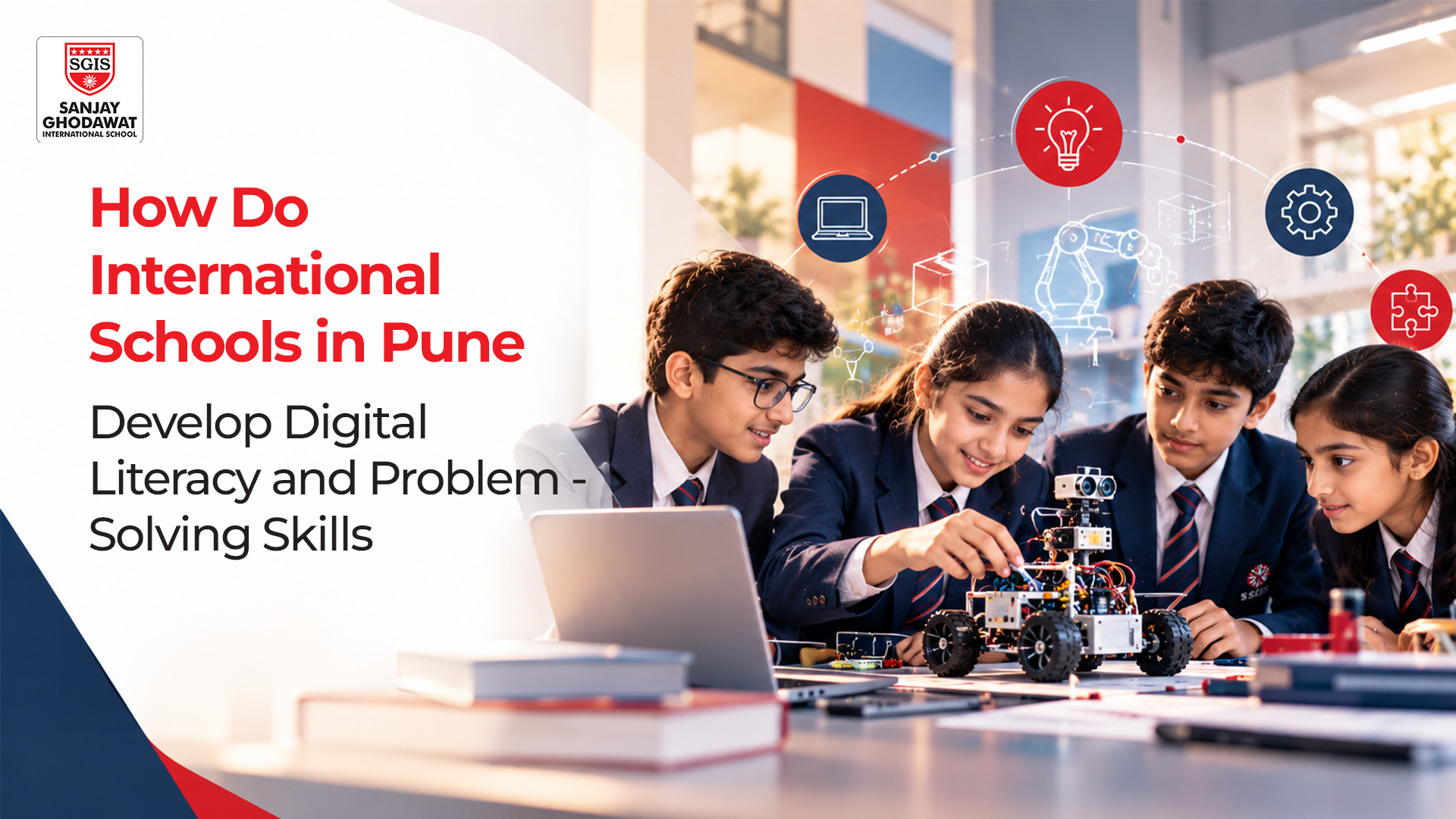
Technology is now a part of almost every aspect of life, from communication and education to healthcare and business. As children grow up in a digital world, they need more than basic computer knowledge. They must learn how to use technology safely, evaluate information, think critically and solve problems independently.
This is why international schools in Pune increasingly focus on developing digital literacy and problem-solving skills alongside academic learning. Through practical activities, classroom discussions, research projects and collaborative assignments, students learn to apply their knowledge in real-life situations. These skills help them become confident learners who can adapt to new challenges.
What Is Digital Literacy, and Why Does It Matter?
Digital literacy is the ability to use digital devices, online resources and technology effectively, safely and responsibly. It includes finding reliable information, communicating online, understanding digital content and protecting personal information.
For students, digital literacy goes beyond knowing how to operate a computer or use an application. They must also understand how to identify misleading information, respect others online and recognise the importance of privacy.
For example, when preparing a school project, students may research a topic using online sources. Digital literacy helps them compare information, check its credibility and present their findings in their own words. These abilities support academic learning and prepare students to use technology responsibly in higher education and their future careers.
How Do International Schools in Pune Develop Digital Literacy?
International schools in Pune develop digital literacy by teaching students to use technology effectively, evaluate online information and practise safe, responsible digital habits.
1. Integrating Technology into Everyday Learning
Digital tools can make classroom lessons more interactive and help students understand complex concepts. Teachers may use educational videos, digital presentations, interactive quizzes and subject-specific applications to support learning.
For instance, students studying geography can explore digital maps, while science students can use simulations to understand scientific processes. These activities encourage students to engage actively with lessons instead of relying only on textbooks.
The aim is to use technology where it adds value to learning, rather than introducing digital devices without a clear educational purpose.
2. Encouraging Research and Information Evaluation
Students often use the internet to complete assignments, prepare presentations and explore topics beyond their textbooks. However, not every online source provides accurate or trustworthy information.
Teachers can help students learn how to compare sources, check publication details, distinguish facts from opinions and identify misleading content.
This process develops independent research skills and encourages students to ask questions before accepting information as true. It also helps them understand why credible sources and original thinking matter in academic work.
3. Teaching Online Safety and Responsible Technology Use
Digital literacy also involves understanding how to behave responsibly in online spaces. Students need to know how to protect passwords, maintain privacy, recognise suspicious links and communicate respectfully.
Classroom discussions about cyberbullying, digital footprints, misinformation and responsible social media use can help students make better decisions online.
Parents and teachers can reinforce these lessons by setting age-appropriate boundaries and encouraging open conversations about digital experiences. Developing these habits early helps children become more responsible technology users.
How Do Schools Build Problem-Solving Skills?
Schools build problem-solving skills through practical projects, coding, teamwork and inquiry-based learning, helping students develop critical thinking, creativity and confidence in tackling real-world challenges.
1. Learning Through Projects and Practical Activities
Project-based learning encourages students to apply classroom knowledge to practical challenges. Instead of simply memorising information, students investigate problems, explore possible solutions and explain their decisions.
For example, students might design a model of an energy-efficient home, create a plan to reduce classroom waste or develop a simple application to address a common problem.
Such activities encourage planning, experimentation and logical thinking. Students also learn that mistakes are part of the learning process and that improving an idea often requires several attempts.
2. Encouraging Coding and Computational Thinking
Coding can introduce students to a structured approach to problem-solving. By creating simple programmes, students learn to break a large task into smaller steps, identify errors and test different solutions.
Computational thinking is useful even for students who do not plan to pursue careers in technology. It develops logical reasoning, pattern recognition and the ability to approach challenges systematically.
Depending on their age and curriculum, students may explore block-based coding, robotics, programming exercises or digital design activities.
3. Promoting Group Work and Collaborative Learning
Many real-world problems require people to work together, share ideas and consider different perspectives. Group assignments give students opportunities to develop these abilities in the classroom.
When working on a shared project, students may divide responsibilities, discuss challenges, evaluate suggestions and agree on a solution. They also learn to communicate clearly and resolve differences respectfully.
Collaborative learning helps students understand that there may be several ways to approach a problem. Listening to others can lead to better ideas and more thoughtful decisions.
4. Using Inquiry-Based Learning
Inquiry-based learning encourages students to ask questions, investigate evidence and develop their own understanding of a subject.
For example, a teacher might ask students why certain materials are better insulators or how a community can reduce water consumption. Students can research the issue, conduct experiments, analyse findings and present possible solutions.
This approach develops curiosity and encourages students to take responsibility for their learning. It also connects classroom concepts with situations they may encounter in everyday life.
How Do These Skills Prepare Students for the Future?
Digital literacy and problem-solving skills complement traditional academic knowledge. Together, they help students become more independent, adaptable and confident when facing unfamiliar situations.
These skills can benefit students in several ways:
- Improved academic performance: Students can research topics effectively, organise information and approach assignments with greater confidence.
- Stronger critical thinking: They learn to question assumptions, evaluate evidence and make informed decisions.
- Greater creativity: Practical projects encourage students to experiment with ideas and develop original solutions.
- Responsible technology use: Students understand the importance of online safety, privacy and ethical digital behaviour.
- Preparation for future careers: Familiarity with digital tools and structured problem-solving can support learning across many professional fields.
The value of these skills extends beyond examinations. They help students understand how to learn, adapt and make decisions throughout their lives.
What Should Parents Look for When Choosing a School?
Parents evaluating international schools in Pune should look beyond the availability of computer laboratories or smart classrooms. It is important to understand how technology is used to improve learning outcomes.
Consider whether the school provides opportunities for hands-on projects, coding activities, research, group discussions and practical experiments. Ask how teachers guide students in evaluating online information and maintaining digital safety.
Parents should also look for a balanced learning environment where technology complements physical activities, creative subjects, communication and personal development. A school that encourages curiosity, independent thinking and responsible technology use can help children develop skills that remain valuable as technology continues to evolve.
Conclusion
Digital literacy and problem-solving are essential skills for students growing up in a technology-driven world. Through practical projects, inquiry-based learning, collaborative activities and responsible technology use, schools can help children become confident and independent thinkers. When comparing international schools in Pune, parents should look for an environment that balances digital learning with strong teaching and overall development. SGIS Pune aims to nurture well-rounded learners by encouraging academic growth, independent thinking and skills that prepare students for future challenges.
FAQs
1. How do international schools in Pune develop digital literacy among students?
International schools in Pune develop digital literacy through digital learning tools, online research, interactive lessons and technology-based projects. Students learn to evaluate online information, protect personal data and use technology safely and responsibly.
2. What should parents look for in the best international school in Pune?
Parents should look for a strong academic curriculum, experienced teachers, technology-integrated learning, practical activities and opportunities to develop critical thinking. A balanced approach to academics, digital literacy and overall development is equally important.
3. How does project-based learning improve problem-solving skills?
Project-based learning encourages students to identify challenges, research possible solutions, test ideas and work collaboratively. It helps them develop logical reasoning, creativity, decision-making and the confidence to solve real-world problems.
4. Why is digital literacy important for students in international schools in Pune?
Digital literacy helps students research effectively, identify reliable information, communicate online and understand digital safety. These skills support academic learning and prepare students to use technology responsibly in higher education and future careers.
5. How can parents support digital literacy and problem-solving at home?
Parents can encourage children to explore educational resources, solve puzzles, participate in creative projects and discuss online safety. Allowing children to make age-appropriate decisions and learn from mistakes also builds independence and critical-thinking skills.