Author name: SGIS Pune

blogs

Top 10 Boarding Schools In Pune

Residential schools are places where students live on campus while they study. These schools often attract students from different cities or even countries. Pune, located in Maharashtra, has a variety of boarding schools that cater to different needs. This place has emerged as an epicenter for the best boarding education. In this blog, we’ll look at the top 10 residential schools in Pune by covering their fees, facilities, and more. These schools are well-regarded and offer a unique educational experience and provide a home for many students seeking accommodations. List of the Boarding Schools in Pune, Maharashtra Here is the list of educational institutions in Pune that cater to the comprehensive development of learners by providing them with holistic excellence. 1. Sanjay Ghodawat International School, Pune (SGIS Pune) Sanjay Ghodawat International School is the top boarding school in Maharashtra, situated in the small village of Mulshi near Pune. Founded in 2010, The school is dedicated to providing students with a high-quality education along with diverse knowledge and experiences. They focus on the overall development of students and instill adequate skills in them that are needed to face future challenges. Moreover, the school aims to create an environment where students can remain humble, peaceful, and grounded for a brighter future. Every student is given value and possibilities to grow and flourish. Understanding that each learner is unique, they offer personalized attention to support individual learning styles and help students develop into well-rounded individuals. School Details Curriculum IBDP, IGCSE & CAMBRIDGE Class Level I – XII Facilities Boarding, Medical Facilities, Computer Labs, Science Laboratories,  Playground, Dining Hall, Sports and more. Address Village: Rawade, Mulshi, Pune, Maharashtra 412108 Annual Fee Starting ₹725000 2. Shri Shivaji Preparatory Military School Opened in June 1932 by the All India Shri Shivaji Memorial Society, this school provides military training and focuses on holistic development. They have been in this industry for a century now. With an organized time-efficient routine for every day, it prepares students academically and personally which makes it one of the best options in Pune. All the parents have plenty of positive reviews to offer about this educational institution in Pune, Maharashtra. School Details Curriculum Maharashtra State Board (MSBSHSE) Class Level I to XII Facilities Assembly Hall, House Block, Computer lab, Library, Dispensary, Refectory, and a lot more. Address Kennedy Road, near RTO, Pune, Maharashtra, 411001 Annual Fee ₹1,77,350 3. BK Birla Centre for Education BK Birla Centre for Education is a leading CBSE residential school that features highly qualified teachers dedicated to nurturing students’ futures in the most effective way possible. BK Birla emphasizes quality education in a supportive environment, alongside various extracurricular activities that offer the needed exposure to all the students coming from different backgrounds. This makes it one of the best residential schools in Pune.   School Details Curriculum CBSE Class Level I to XII Facilities Boarding, Medical Facilities, Recreational Room, Dining Hall, Hobby Clubs, Yoga and more. Address Post Box No: 1, Talegaon Dabhade, Taluka Maval, Dist. Pune – 410506 Annual Fee ₹1,98,000 4. UWC Mahindra College UWC was established in the year 1997 and is part of a global education movement that aims to bring together people and cultures for a peaceful future. This school encourages experiential learning which makes it an excellent choice for students. Many reviews highlight it as one of the top schools in Pune.   School Details Curriculum International Baccalaureate Diploma Program(IBDP) Class Level XI & XII Facilities Alumni Association, Auditorium, Boys hostel, picnics and excursion, gym, labs, and many other facilities. Address GHVM+7VM, Paud, Nanegaon, Maharashtra 412108 Annual Fee USD 35,700 for overseas students and INR 24,80,625 for Indian nationals 5. Sahyadri School Founded in September 1995 by the Krishnamurti Foundation, Sahyadri School is about 70 km from Pune. This school is situated on the Tiwai Hill near the Bhima River. It focuses on learning in natural environments and allows students to explore various subjects through creativity and imagination. With a focus on academics, arts, sports, and more, this school is considered one of the best residential schools in Pune that has comfortable living arrangements.   School Details Curriculum ICSE Class Level IV-XII Facilities Wifi, Smart classes, Hostel, canteen, playground, Media room, Medical room, daycare, transportation. Address Rajgurunagar, Dist. Pune, Tiwai Hill, Maharashtra 410513 Annual Fee ₹6,00,000 for classes 4–10 and ₹7,00,000 for class 11 6. Cathedral Vidya School Cathedral Vidya School is one of the top boarding schools in Pune which is created in collaboration with The Cathedral and John Connon School in Mumbai, a prestigious institution since 1860. The school aims to develop its students into global citizens through an international curriculum and a focus on student-centered learning.   School Details Curriculum IB, ICSE, IGCSE Class Level 4th-12th Facilities Laboratory, Arts, Medical/Infirmary, Sports, School Transport, Refectory and more. Address Opposite Mumbai Pune Highway, Shilatne, Village, National Highway 4, Pune, Maharashtra 410405 Annual Fee ₹ 6,50,000 7. MIT Pune’s Vishwashanti Gurukul MIT Pune’s Vishwashanti Gurukul is also one of the best boarding institutions in Pune. This school is committed to academic excellence and offers challenging international education which they think is crucial for students to deal with the modern world challenges in the future. The faculty focuses on empowering students with new learning styles and encouraging social awareness and a sense of belonging. They also embrace technology which is developing across the globe in a way that promotes critical thinking through innovative teaching approaches.   School Details Curriculum International Baccalaureate Curriculum. Class Level Nursery-XII Facilities Laboratory, Arts, Medical/Infirmary, Sports, School Transport, Refectory and more. Address Pune Location Rajbaug, Next to Hadapsar Loni–Kalbhor, Pune – Maharashtra – India – 412 201 Annual Fee ₹ 4,55,000 8. Vibgyor High  Vibgyor High started in 2004 with a vision to deliver inclusive education which is a blend of expertise from academic and corporate sectors. The school offers a rich educational experience that integrates academics, sports, arts, and hands-on learning. Today, it is recognized as one of the leading schools in India, which provides various educational streams, including CISCE,

blogs

The Importance Of Regular Newspaper Reading

Reading newspapers may appear ancient nowadays, yet it remains a crucial source of information and insight. Newspapers offer a unique combination of in-depth analysis, various perspectives, and accurate reporting that is sometimes lacking in the fast-paced world of social media. They are an essential tool for comprehending the world’s intricacies, ranging from small community happenings to global processes in politics. Reading newspapers on a daily basis not only keeps people up to date on current events, but it also develops critical thinking skills, language and communication abilities, which encourages a better understanding of different points of view. As we navigate an increasingly connected world, reading newspapers provides a disciplined approach to consume information, ensuring us remain informed and involved citizens. This blog post will delve into the importance of regular newspaper reading and how it can enrich our lives in countless ways. The Importance of Regular Newspaper Reading Why Read Newspapers? 1. Staying Informed About Current Events 2. Enhancing Critical Thinking Skills 3. Improving Language and Communication Skills 4. Understanding Diverse Perspectives 5. Keeping Up with Local Issues 6. Cultivating a Habit of Lifelong Learning 7. Fostering Community and Connection 8. Navigating the Digital Age Why Read Newspapers? 1. Staying Informed About Current Events One of the primary reasons to read newspapers regularly is to stay updated on current events. Newspapers provide readers a well-rounded perspective on a range of topics by providing thorough coverage of local, national, and worldwide news. By reading newspapers, individuals can gain insights into politics, economy, social concerns, and cultural events. This understanding is critical for making sound judgments in both personal and professional settings. For instance, understanding political developments can help voters make educated choices during elections. Similarly, understanding economic patterns may help you organize your finances and make smarter investing selections. By regularly reading newspapers, individuals become informed citizens who can engage meaningfully in discussions about significant issues. 2. Enhancing Critical Thinking Skills Regular newspaper reading fosters critical thinking skills. Newspapers often present multiple viewpoints on a single issue, encouraging readers to evaluate different perspectives critically. This technique not only improves analytical abilities but also leads to a deeper understanding of complicated topics. As readers encounter editorials, opinion pieces, and analysis articles, they learn to distinguish between facts and opinions. This skill is becoming more crucial in a world flooded with information, where misinformation and excitement can impair cloud judgment. By developing critical thinking skills through newspaper reading, individuals can navigate the complexities of contemporary issues more effectively. 3. Improving Language and Communication Skills One of the best ways to enhance communication and language abilities is to read newspapers. Newspapers may be read by a broad audience since they are usually written in simple and straightforward language. Regularly engaging with well-crafted articles can enhance vocabulary, comprehension, and writing skills. Furthermore, exposure to diverse writing styles and formats helps readers become more adept at expressing their thoughts and ideas. Whether it’s drafting a business proposal or composing an email, strong communication skills are essential in today’s professional landscape. Regular newspaper reading can significantly contribute to this development, making individuals more effective communicators. 4. Understanding Diverse Perspectives One of the unique features of newspapers is their ability to present diverse perspectives on various issues. Different publications may cater to different audiences and offer distinct viewpoints. By reading a variety of newspapers, individuals can gain insights into cultural, political, and social differences that exist within and between communities. This knowledge is especially crucial in a society that is becoming more interconnected by the day. Understanding multiple points of view might help us develop empathy and respect when we engage with individuals from different backgrounds. Regular newspaper reading encourages individuals to appreciate diversity and navigate cross-cultural interactions with greater awareness. 5. Keeping Up with Local Issues While national and international news is essential, local news plays a critical role in connecting individuals to their communities. Local newspapers cover events, initiatives, and developments that directly impact residents. By reading local news, individuals become more engaged citizens who can participate in community discussions and activities. Newspapers provide a forum for citizens to remain up to date on local government policies and community activities. This connection can lead to increased involvement in politics, creating a sense of identity and responsibility in the wider society. 6. Cultivating a Habit of Lifelong Learning One could establish a lifetime learning habit by making reading the newspaper a regular part of their daily routine. As readers encounter various topics and issues, they expand their knowledge base and remain intellectually curious. This thirst for knowledge is vital in an ever-changing world where new information and developments are constant. Regularly engaging with newspapers can lead to discussions, debates, and further exploration of topics of interest. Whether it’s diving deeper into a particular news story or exploring a related subject, the habit of reading newspapers encourages individuals to seek knowledge beyond what is presented in print. 7. Fostering Community and Connection Newspapers often highlight community stories, local businesses, and individuals making a difference. By reading these stories, individuals can connect with other people and build a sense of belonging. Local newspapers often serve as a platform for sharing achievements, events, and opportunities within the community. Moreover, newspapers provide a space for conversation through letters to the editor and opinion articles. This engagement allows readers to voice their thoughts and contribute to community discussions, fostering a sense of connection and belonging. 8. Navigating the Digital Age In the current digital environment, it’s simple to become overwhelmed by the abundance of information on the internet. Although social media can deliver rapid updates, newspapers frequently offer more background and depth. But an organized method to information intake is offered by regular newspaper reading, which enables readers to process news in a more significant way. Moreover, newspapers often engage in investigative journalism, uncovering significant stories that other media sources might not. By prioritizing newspaper reading, individuals can access well-researched and credible information, allowing them to effectively navigate the complexities of the internet

blogs

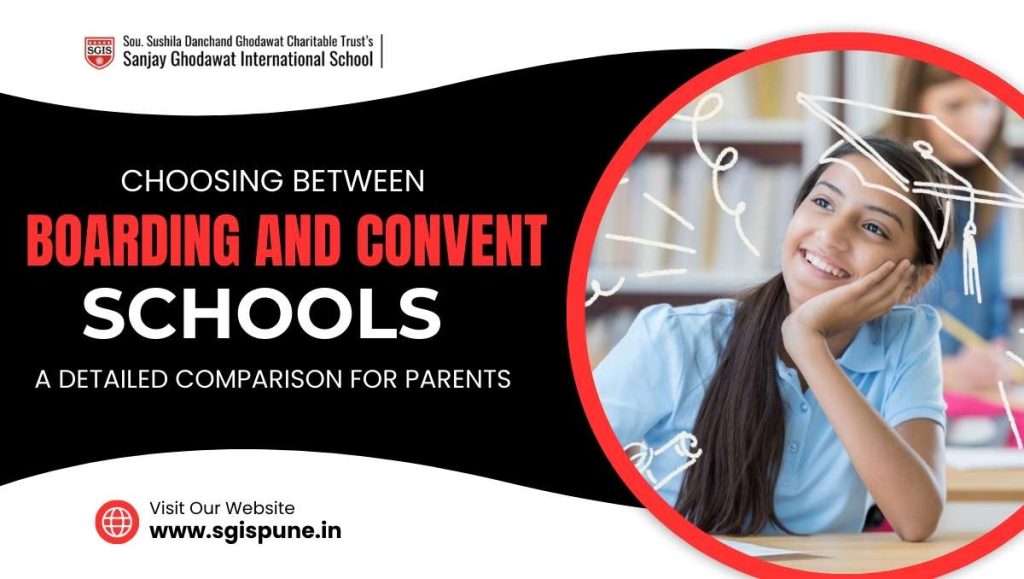
Choosing Between Boarding And Convent Schools: A Detailed Comparison For Parents

Education plays a critical role in shaping a child’s tomorrow. It is an essential determination for parents to select the appropriate school for their kids by adequately looking after elements like curriculum, facilities, and teaching approaches. Two prevalent choices that parents usually consider are Boarding and Convent Schools. Both of the educational institutions present exceptional academic knowledge, but there are precise differences between the two. In this blog, we will study the key differences between boarding schools and convent schools to assist parents in making informed conclusions. Key Differences Between Boarding And Convent Schools Know The Differences Between Boarding And Convent Schools 1. Definition And Structure 2. Focus and Philosophy  3. Residential Life  4. Curriculum And Education 5. Cultural And Social Exposure 6. Cost And Accessibility What is a Convent School? A convent school is a kind of academic organization that is generally affiliated with a religious order, especially within the Christian faith, such as Catholic nuns. These schools strive to deliver quality teaching while encouraging spiritual development and ethical growth among learners. They generally cater to students from prekindergarten through high school. However, some schools may offer early childhood education or vocational training. The curriculum is a blend of theoretical subjects with religious teaching which concentrates on values such as compassion, integrity, and community service. In India, one can consider convent education in Pune, as this site has some of the best convent institutions. What is a Boarding School? In simple words, a boarding school is a place where students reside within the school campus, typically in dorms or residential structures, during their school year. Boarding schools usually offer ongoing learning surroundings where students eat, sleep, study, and take part in extracurricular activities in contrast to traditional educational institutions where they go home after class. Boarding schools often comes with an accepting community that provides safety and care, a promising future, and something for everyone. Several exceptional boarding schools are located in many states of India like the best boarding schools in Pune presenting a variety of opportunities for all. Know The Differences Between Boarding And Convent Schools Here are some of the key differences between boarding and convent schools in India: 1. Definition And Structure Boarding Schools: Boarding schools are academic campuses where students live inside the school premises, away from their parents. These schools offer educational as well as residential facilities for students and provide them with a comprehensive learning experience. Convent Schools: Convent schools are generally operated by religious orders, mainly by the nuns. These educational institutions might offer boarding amenities but are primarily recognized for their day-schooling approach. 2. Focus and Philosophy  Boarding Schools: Boarding institutions usually concentrate on holistic growth by concentrating on key elements like academic excellence, character building, and extracurricular activities. They provide an organized surrounding where students know about independence, discipline, and self-reliance. Convent Schools: Convent Schools usually have a religious affiliation and integrate spiritual values and learning into their curriculum. Such as Top convent schools in Pune focus on moral and ethical values alongside academic excellence. Therefore, they aim to encourage a sense of inclusivity, discipline, and religious learning. 3. Residential Life  Boarding Schools: Students can reside and study together in boarding schools in India. Students here share their rooms, and dormitories, and follow a prescribed routine. These schools usually offer plenty of extracurricular activities, sports, and clubs to encourage social engagement and individual growth. Convent Schools: Majorly, convent institutions work as day schools. Students go to campus from their homes and indulge in educational and extracurricular practices in their school timings. 4. Curriculum And Education Boarding Schools: Boarding Schools usually present an overall curriculum that concentrates on academics, sports, arts, and other co-curricular activities. They usually have well-qualified professional teachers, small class batches, and availability of contemporary facilities and resources. Convent Schools: Convent Schools usually follow the state or national education board’s curriculum in addition to religious learning and moral values. They aim to present well-rounded teaching with a concentration on character development, ethical values, and spiritual growth. 5. Cultural And Social Exposure Boarding Schools: Boarding schools invite students from different backgrounds and cultures. Such multicultural surroundings offer students with the exposure to unique perspectives, opinions, traditions, and languages. Students learn to respect diversity and create cross-cultural communication skills and bonding. Convent Schools: Convent schools also invite students from different backgrounds, but they might have the majority of the local or regional population of students. However, they still encourage a welcoming and harmonious environment where students can know each other’s beliefs and traditions. For example, Pune residential schools have students from diverse states and backgrounds and offer quality education for all. 6. Cost And Accessibility Boarding Schools: Boarding schools usually have higher tuition fees as compared to day schools. This is due to the additional residential amenities and services that they provide to students. However, scholarships and economic help might be there for qualified students. These educational institutions are fit for students who prefer well-rounded academic learning and are fine to invest in their kid’s overall growth. Convent Schools: Convent Schools are usually more accessible when it comes to costs. They deliver the best education at a lower fee structure as compared to boarding schools. Such factors create an attractive choice for parents who are looking for value-based education within their budget. Conclusion  The selection between boarding and convent schools relies on different aspects such as parental choices, the child’s requirements, and the family’s values. Boarding schools present a residential setting and holistic academic knowledge, promoting freedom and discipline. Convent schools, on the other hand, deliver a value-based teaching with an emphasis on ethical and spiritual development. Both kinds of institutions possess their facilities, and parents are required to evaluate the most suitable convent and the top boarding school in India for their children.

Scroll to Top