
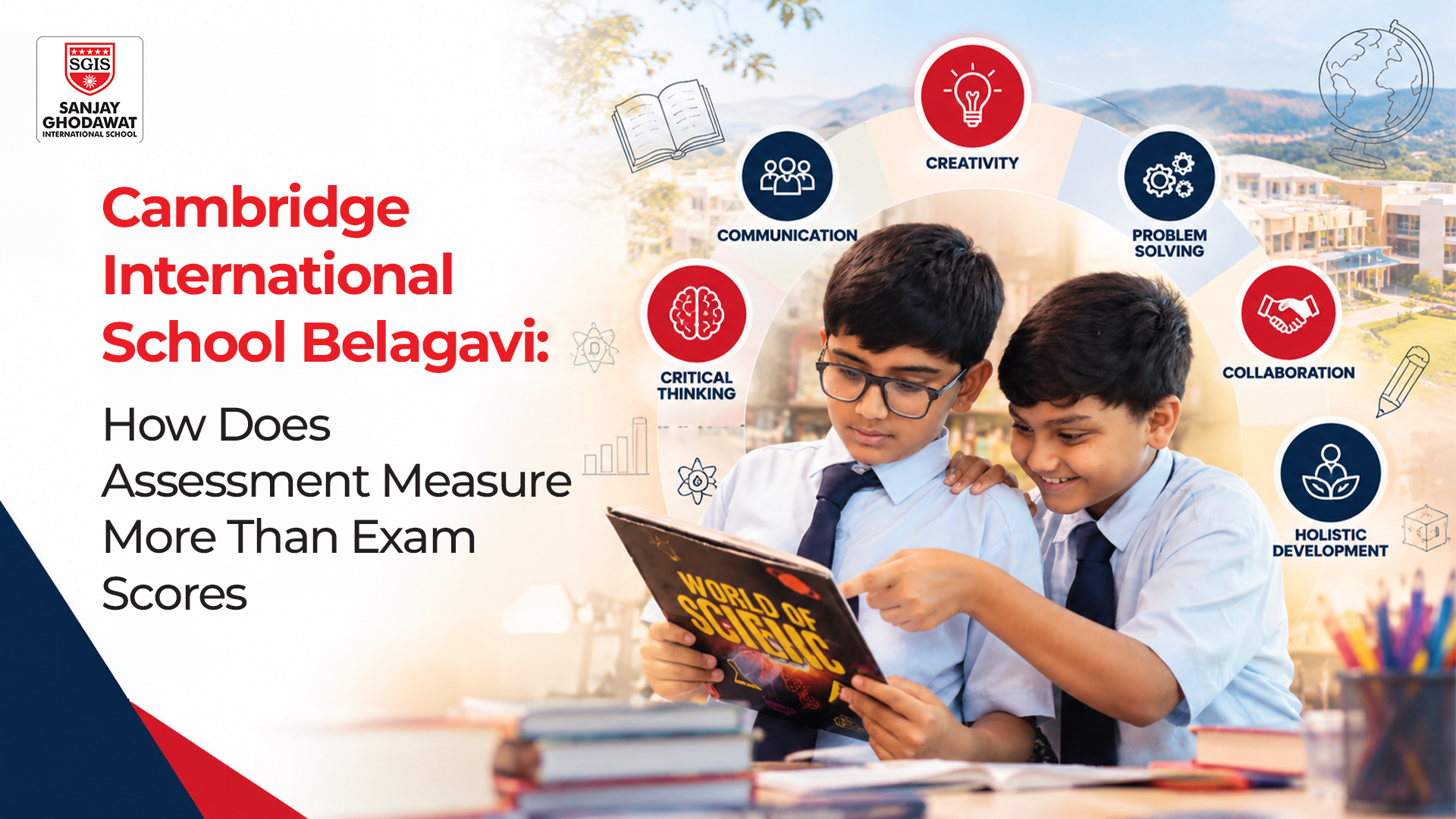
A student’s progress cannot always be measured by marks on a report card. Some students excel at written examinations, while others demonstrate their abilities through creative projects, classroom discussions, experiments or practical activities. Understanding these differences is important for providing a meaningful learning experience. At a Cambridge International School in Belagavi, assessment can go beyond testing how much information students remember.
It can also help teachers understand how students apply knowledge, approach challenges, communicate ideas and develop independent thinking. This broader perspective gives parents a clearer picture of their child’s strengths, learning needs and overall academic progress.
Why Should Student Assessment Go Beyond Marks?
Student assessment should measure not only academic performance but also understanding, critical thinking, creativity and individual progress.
Understanding the Learning Behind Every Answer
Examination scores show how a student performs in a particular assessment, but they may not reveal the entire learning process. A student might know the correct answer but struggle to explain the reasoning behind it. Another student might make a mistake while demonstrating a thoughtful approach to solving the problem.
Looking at both the answer and the process helps teachers understand how students learn. They can identify gaps in understanding, recognise individual strengths and provide support where needed.
Recognising Different Abilities and Learning Styles
Children develop at different rates and demonstrate their abilities in different ways. Some communicate confidently during discussions, while others express their understanding through writing, visual presentations or practical demonstrations.
A broader assessment approach gives teachers opportunities to recognise these differences. It also helps students understand that learning involves more than achieving high marks. Consistent effort, curiosity, improvement and the ability to apply knowledge are valuable parts of academic development.
How Does Cambridge Assessment Reflect Real Learning?
Cambridge assessment evaluates how well students understand concepts, apply knowledge and use critical thinking skills in practical situations.
Applying Knowledge to Practical Situations
Learning becomes more meaningful when students can connect classroom concepts with everyday experiences. Practical assignments, investigations and subject-based projects allow students to demonstrate their understanding beyond written answers.
For example, a science activity may require students to observe an experiment, record results and explain their conclusions. A mathematics task might involve using calculations to solve a real-world problem.
These activities help teachers assess whether students can use what they have learned, rather than simply recall facts. They also encourage students to make connections between different subjects.
Developing Critical Thinking and Independent Judgement
Students need to learn how to question information, examine evidence and form their own conclusions. These abilities are important for academic success and for making informed decisions in everyday life.
Classroom discussions, research assignments and open-ended questions can help teachers understand how students approach unfamiliar problems. Students may be asked to compare viewpoints, explain their reasoning or suggest alternative solutions.
Such activities reveal the thinking behind a response. They encourage learners to become more confident in expressing their ideas while remaining open to different perspectives.
The Role of Feedback in Student Progress
Feedback helps students recognise their strengths, understand areas for improvement and track their academic progress over time.
Helping Students Understand What to Improve
Assessment is more useful when students understand what they have done well and what they need to work on next. Feedback gives them specific guidance instead of focusing only on a score.
For example, a teacher might explain that a student’s research is well organised but needs stronger supporting evidence. This gives the student a clear direction for improvement.
Regular feedback also encourages children to view mistakes as learning opportunities. Instead of feeling discouraged by a lower score, they can identify the problem, practise the relevant skill and try again.
Tracking Progress Over Time
A single examination provides information about performance at one point in time. Looking at a student’s work across assignments, projects and assessments can reveal a more complete picture of development.
Teachers can observe whether students are improving in areas such as writing, analytical thinking, subject knowledge and presentation skills. This makes it easier to adjust teaching methods and provide additional support when necessary. For parents, progress over time can be more informative than comparing marks from one examination with another student’s results.
What Can Parents Learn From Assessment Reports?
Assessment reports help parents understand their child’s strengths, identify learning gaps and support academic progress without putting unnecessary pressure on marks.
Looking Beyond the Final Grade
When reviewing a child’s report, parents should consider more than the final score. Teacher comments, completed assignments and feedback on specific skills can help explain how the child is progressing.
Parents can discuss questions such as –
- Which subjects or concepts does my child understand confidently?
- Where does my child need additional practice?
- Is my child becoming more independent when completing assignments?
- How well does my child explain ideas and solve unfamiliar problems?
- What can we do at home to support the next stage of learning?
These conversations help parents and teachers work together to support the child’s development.
Building Confidence Without Unnecessary Pressure
When children are judged only by marks, they may become afraid of making mistakes or trying something unfamiliar. A balanced approach to assessment can help them focus on learning, improvement and personal goals.
Recognising effort, asking thoughtful questions and celebrating progress can encourage students to participate more actively in class. It can also help them develop resilience when a task becomes challenging.
Parents play an important role by discussing what their children learned, rather than asking only how many marks they received.
Preparing Students for Learning Beyond School
The ability to think critically, communicate clearly, collaborate with others and apply knowledge is valuable well beyond the classroom. These skills support students as they move towards higher education and future career opportunities.
Assessment methods that recognise practical application and independent thinking can help students understand their strengths and identify areas for development. They also encourage learners to take greater responsibility for their progress.
For families exploring a Cambridge International School in Belagavi, it is worth understanding how the school uses assessment results and teacher feedback to guide learning. The aim should be to help students build strong subject knowledge while developing the confidence and skills to apply it in different situations.
Conclusion
Meaningful assessment helps educators understand not only what students know but also how they think, apply knowledge and improve over time. When marks are supported by practical work, constructive feedback and regular progress reviews, students gain a clearer understanding of their abilities. SGIS,Belagavi, encourages a learning-focused approach that supports academic development and the growth of independent, confident learners. For parents, understanding the purpose of assessment can help them support their child’s progress beyond examination results.
Frequently Asked Questions
1. How does a Cambridge International School in Belagavi assess students beyond exam scores?
Assessment may include classroom activities, projects, practical tasks, presentations and teacher feedback, depending on the subject and grade. These methods help educators understand students’ subject knowledge, application skills and progress alongside their examination performance.
2. Why is continuous assessment important for students?
Continuous assessment helps teachers monitor learning throughout the academic year. It can identify areas of difficulty early, provide opportunities for improvement and help students build confidence through regular feedback and practice.
3. How does Cambridge assessment encourage critical thinking?
Cambridge assessment can include questions and activities that require students to analyse information, explain their reasoning, interpret evidence and apply concepts. These tasks encourage deeper understanding rather than relying entirely on memorisation.
4. How can parents understand their child’s progress beyond marks?
Parents can review teacher comments, assignments, project work and progress reports. Discussing strengths, learning challenges and improvement goals with teachers provides a broader understanding of a child’s academic and personal development.
5. What should parents look for when choosing a Cambridge school in Belagavi?
Parents should explore the school’s curriculum, teaching approach, assessment practices, feedback methods and student support systems. Understanding how teachers track progress and help students improve can help families choose a learning environment suited to their child’s needs.