
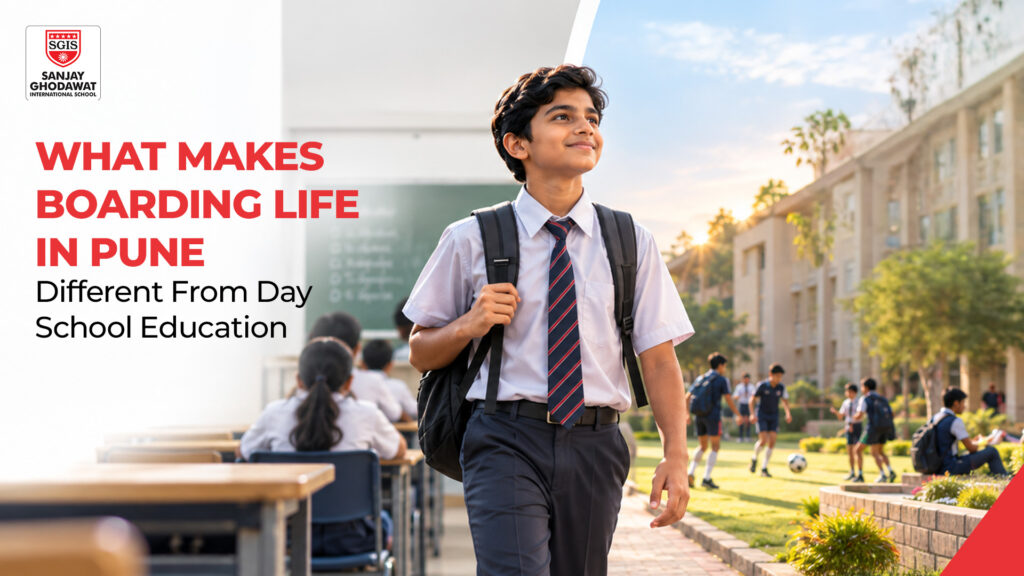
For many parents, choosing a school is about much more than academics. It is also about the kind of environment in which a child will learn, build relationships, handle responsibilities, and discover their strengths. A day school gives students the experience of learning during school hours before returning home.
Boarding education, on the other hand, extends learning beyond the classroom. Students live, study, participate in activities, and interact with their peers within the same community. This difference makes boarding education a distinct experience. For families exploring boarding schools in Pune, understanding what residential life actually offers can help them look beyond academics and consider the wider development of their child.
Boarding School vs Day School: The Difference Goes Beyond School Hours
The biggest difference is not simply where a student sleeps. It is how much of their daily life becomes part of the learning experience.
In a day school, students typically spend a fixed number of hours on campus and return home afterward. At a residential school, the campus becomes an extended learning environment where students experience structured routines, supervised activities, peer interaction, and greater personal responsibility.
| Day School Education | Boarding School Education |
| Students return home after school | Students live on campus |
| Family manages most routines | Students gradually manage daily routines |
| Learning is mainly within school hours | Learning also happens through activities and daily experiences |
| More time is spent with family | More time is spent building peer relationships |
| Parents are closely involved in everyday decisions | Students get opportunities to make age-appropriate decisions |
Neither model is identical for every child. The right choice depends on a student’s personality, needs, interests, and readiness for a residential environment.
7 Ways Boarding Life in Pune Can Be Different
1. The School Day Doesn’t Really End at the Last Bell
In residential education, learning continues after regular classes. Students may participate in sports, clubs, creative activities, supervised study, or community events.
This creates a more immersive routine where academic and non-academic experiences become part of everyday life.
2. Independence Becomes Part of the Daily Routine
A boarding student may need to organise personal belongings, follow schedules, prepare for activities, and manage their time.
These small responsibilities may seem ordinary, but doing them consistently can help students develop greater self-management and confidence.
3. Friendships Develop Through Shared Experiences
Day-school students may spend several hours together before returning home. Boarding students often share many more experiences with their peers.
Meals, activities, sports, celebrations, study sessions, and everyday conversations can create opportunities to develop communication, cooperation, and lasting friendships.
4. Pune Becomes More Than Just a School Location
Pune offers a distinctive setting for residential education, combining an established educational ecosystem with a city known for its cultural and academic environment.
For families considering residential schools in Pune, the location can be one factor to consider alongside curriculum, campus facilities, boarding arrangements, student support, safety, and extracurricular opportunities.
5. Students Learn to Balance Academics and Activities
Boarding education can provide a structured environment where students have opportunities to balance classroom learning with sports, arts, clubs, hobbies, and other activities.
Instead of viewing these activities as something separate from education, students can experience them as part of their overall school life.
6. Support Is Available Beyond Classroom Hours
In a residential setting, teachers, mentors, house staff, and other members of the school community can play a role in students’ everyday experiences.
This can create an environment where students have opportunities to seek guidance, discuss challenges, and receive support as they adjust to living away from home.
7. Students Experience a Diverse Community
Boarding schools can bring together students from different cities, regions, and backgrounds.
Living and learning alongside people with different experiences can encourage students to communicate openly, understand different perspectives, and become more adaptable in social situations.
How Boarding Life Can Shape Skills That Classrooms Don’t Always Teach
A textbook can explain responsibility. Daily life can give students the opportunity to practise it. Boarding environments may help students develop:
- Time management through structured routines
- Responsibility through personal tasks
- Communication through shared living
- Adaptability through new experiences
- Teamwork through sports and group activities
- Confidence through independent decision-making
- Problem-solving through everyday challenges
These skills can become increasingly valuable as students move towards higher education and adult life.
Why Parents Should Look Beyond the “Best Boarding School in Pune” Label
When parents search for the best boarding school in Pune, it can be tempting to focus only on rankings, facilities, or academic results. A better approach is to understand what the school experience actually looks like.
Parents can consider questions such as:
- How are students supported when they are away from home?
- What does a normal boarding-day schedule look like?
- How much time is given to sports and extracurricular activities?
- What kind of pastoral or mentoring support is available?
- How does the school maintain communication with parents?
- What are the accommodation and supervision arrangements?
- How does the school encourage independence?
- Does the curriculum match the child’s long-term educational goals?
The answers can reveal much more about the student experience than a simple “best school” label.
What Should Parents Look for in Boarding Schools in Pune?
Before shortlisting boarding schools in Pune, parents can create a simple checklist:
Academic Environment
Look at the curriculum, teaching approach, academic support, and opportunities for higher education preparation.
Residential Facilities
Understand accommodation, meals, hygiene, recreation areas, supervision, and student routines.
Student Well-Being
Ask how the school supports students emotionally and socially while they are living away from home.
Sports and Activities
Explore opportunities beyond academics, including sports, arts, clubs, leadership activities, and hobbies.
Safety and Supervision
Understand the school’s systems for student safety, supervision, healthcare, emergencies, and campus security.
Parent-School Communication
Check how frequently parents receive updates and how the school communicates about academic and personal matters.
Boarding Education Is About Learning to Live, Not Just Learning to Study
The real distinction between boarding and day-school education can be found in the experiences that happen outside the classroom. A residential school gives students opportunities to practise independence every day, build relationships within a close community, explore interests, and gradually take greater responsibility for their choices.
For parents considering residential schools in Pune, the decision ultimately comes down to finding an environment that matches their child’s needs and future goals.
Conclusion
Boarding life can turn everyday moments into learning opportunities, from managing a morning routine to working with a team, making a decision, solving a problem, or supporting a friend. For families exploring the best boarding school in Pune, looking at the complete student experience can be more useful than focusing on academics alone. SGIS Pune provides an environment where students can experience structured residential life while developing independence, confidence, and essential life skills. A supportive boarding community can also help students build meaningful friendships and learn to adapt to new experiences.
Frequently Asked Questions
1. How is boarding school different from day school education?
Boarding schools combine academics with residential life, giving students opportunities to develop independence, time management, social skills, and responsibility beyond regular classroom hours.
2. What are the benefits of boarding schools in Pune?
Boarding schools in Pune can offer a structured learning environment, diverse peer interactions, extracurricular activities, and opportunities for students to become more independent and confident.
3. Are residential schools in Pune suitable for every child?
Not every child has the same needs. Parents should consider their child’s age, personality, independence, interests, and readiness to live away from home before choosing a residential school.
4. How does boarding life help students become independent?
Boarding life encourages students to manage daily routines, organise their belongings, make age-appropriate decisions, manage their time, and handle everyday challenges with appropriate guidance.
5. What should parents consider when choosing a boarding school in Pune?
Parents should evaluate the curriculum, boarding facilities, student safety, supervision, pastoral support, extracurricular activities, academic environment, and communication between the school and family.